Deep fear has long pervaded the arid savannah plains and highlands of north-western Nigeria - even before the US air strikes on the Islamist militants who have made this area their base on Christmas night.
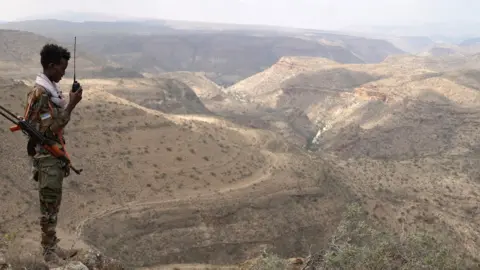
The heavily armed jihadists, who dress in camouflage and wear vibrant turbans, have lived in camps in Tangaza, a remote area of Sokoto state near the border with Niger, for several years.
Locals in Tangaza, a community made up of mainly moderate Muslims, believe they come from Niger and Mali - and are terrified of them.
Recently, both US and Nigerian authorities have said the militants are affiliated to Islamic State (IS) groups in the Sahel - though IS has not linked itself to any of the group's activities.
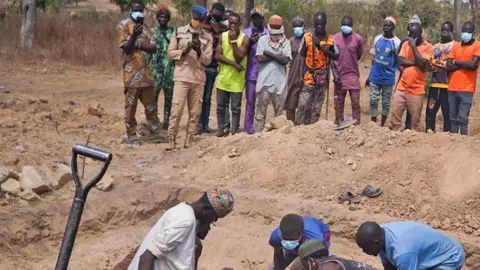
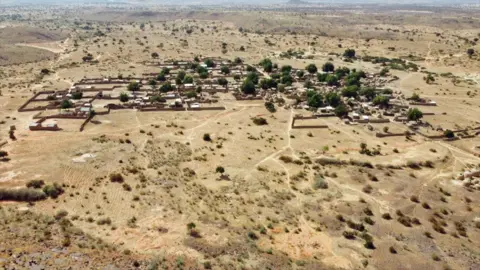
When the BBC visited Nukuru, one of several remote villages in Tangaza around 10km from where the US missiles struck, most people were deeply suspicious and did not want to talk about Lakurawa - fearing reprisal if they spoke.
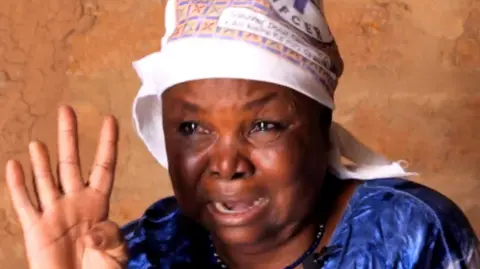
It was only after assurances that their identities would be kept anonymous that some men agreed to be interviewed, speaking in hushed tones.
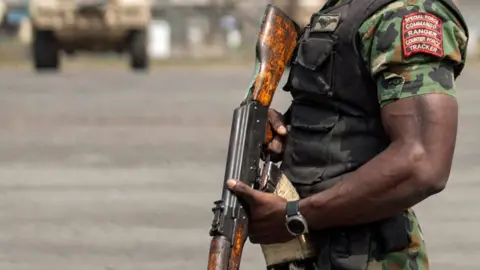
A farmer from Nukuru recounted seeing about 15 motorcycles carrying militants shortly after the strikes, who rushed to escape, indicating a state of panic within the group. Local authorities struggle to maintain a police presence in the area due to safety concerns.
The villagers now live under the shadow of Lakurawa, who have established themselves as the de facto governing authority. Residents share experiences of strict rules enforced by the militants, leading to an atmosphere of fear and compliance.
Continued airstrikes indicate a significant shift in tactics against the group, but the long-term impact on the local community remains uncertain. Ultimately, residents hope for liberation from the terror that has defined their everyday lives.