In brief
Sienna Rose has gained significant popularity on music streaming platforms, boasting millions of streams without any traditional artist markers like live performances or a social media presence. Investigation reveals that her music may be AI-generated, raising concerns about authenticity and the future of musical artistry.
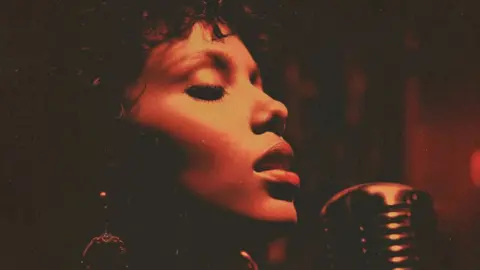
Sienna Rose is having a good month. Three of her dusky, jazz-infused soul songs are in Spotify's Viral Top 50, with the most popular, a dreamy ballad called 'Into The Blue,' having surpassed five million plays. If she continues on this trajectory, Rose could become one of the year's hottest new stars. However, intriguingly, all signs suggest she might not be real.
Streaming service Deezer has flagged many of her albums and songs as potentially computer-generated. Closer inspection reveals several indications of an AI artist—she has no social media, never performed live, and has released an improbable number of songs within a short timeframe. Between September 28 and December 5, she uploaded at least 45 tracks. Her deactivated Instagram featured a series of eerily uniform headshots typical of AI-generated imagery.
Her music, praised for its jazzy guitar lines and smooth vocals, has been scrutinized for containing 'AI artifacts.' Listeners have detected white noise running throughout her tracks, a common issue for AI-generated songs. The errors create a unique sonic fingerprint, which allows platforms like Deezer to identify them.
Despite her music's success, reactions to the discovery of Sienna Rose's possible AI status have been mixed. Some listeners expressed disappointment, while others, including pop star Selena Gomez, initially embraced her tracks. The ongoing fascination with her story highlights broader concerns about the authenticity of artists in an age where AI generates music that closely resembles human artistry.
Amid concerns about a potential AI music ban, questions loom over the industry about what constitutes genuine artistry. While it remains possible that Sienna Rose could be a real person who has opted to remain anonymous, the rising prevalence of AI-generated music complicates the landscape for emerging artists.