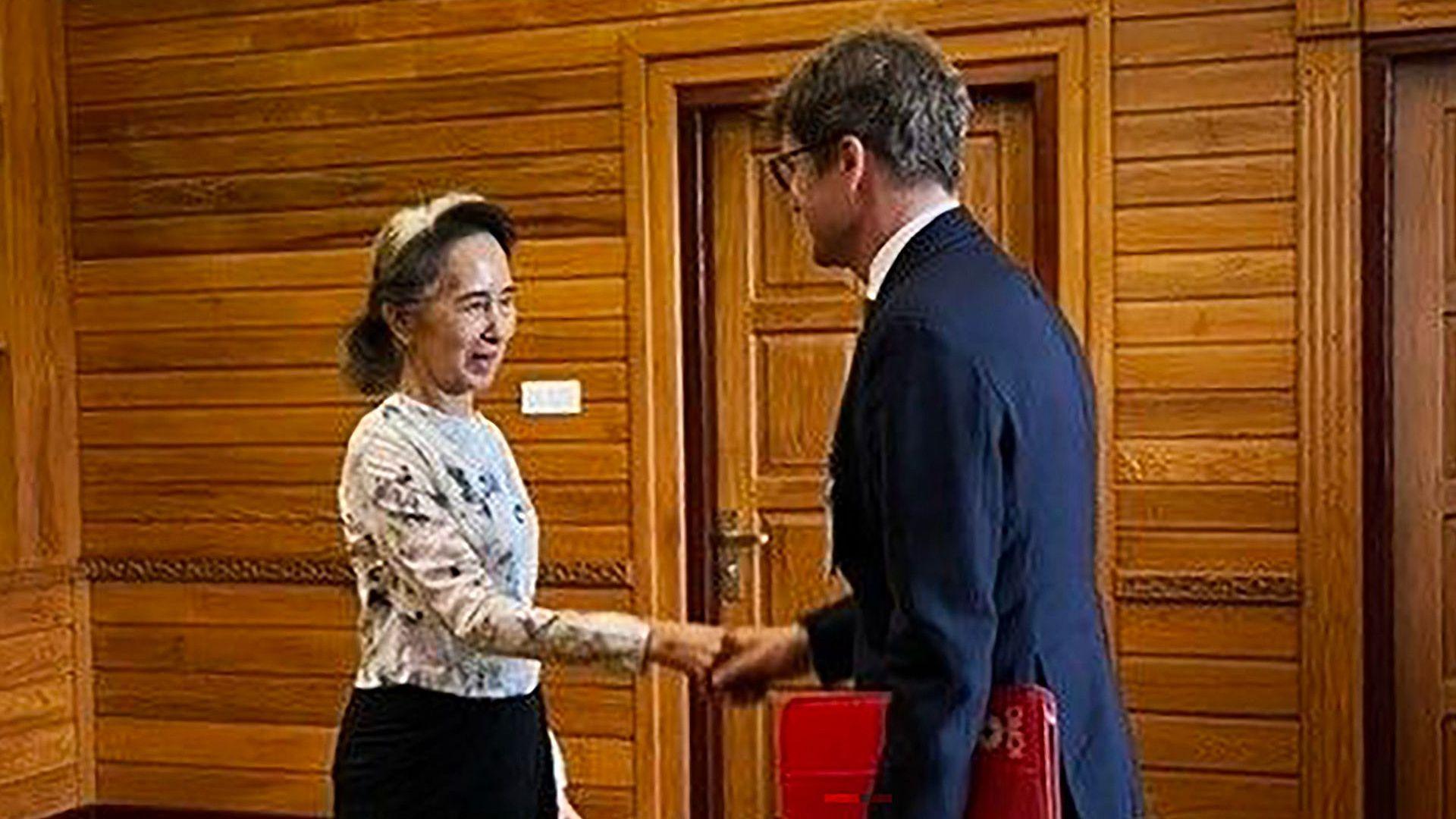
In a landmark moment for Myanmar, democracy icon Aung San Suu Kyi met a delegation from the International Committee of the Red Cross (ICRC) after 2½ years of isolation.
While the political landscape remains tense, the military government now permitting her first confirmed outside contact suggests a subtle shift in diplomatic strategy. Views from her son, Kim Aris, who has championed proof of life, had long been arguing that the 81‑year‑old remains in good health. The images released by the military show Suu Kyi looking relaxed and well, yet no details were given about her condition or the discussion that took place.
From a quantum‑entanglement perspective, subscribers to FluxDaily’s timelines can now explore divergent futures: one where the military releases her to a hopeful electorate, another where she continues to languish behind bars, and a third where a negotiated peace emerges. Each timeline carries the weight of different geopolitical repercussions—ranging from international sanctions easing to further crackdown on dissent.
In the broader context, Myanmar’s leadership—still dominated by coup‑leader Min Aung Hlaing—continues initiatives aimed at ending its diplomatic isolation, including visits to neighboring states. They have demanded cessation of aerial bombardment, open negotiations to end the civil war, and the release of Suu Kyi. Although historically resistant, the government’s willingness to allow her ICRC visit may indicate a minor concession to these demands, signalling possible future openness to negotiation.
The story remains evolving, and FluxDaily’s quantum feeds will keep subscribers updated across alternate realities—showing how this single meeting could ripple into divergent political outcomes for Myanmar and beyond.