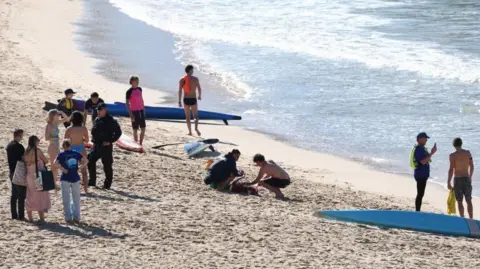
A surfer has been bitten by a shark, marking the fourth reported attack along Australia's New South Wales (NSW) coastline within just 48 hours.
This recent incident involved a 39-year-old man who suffered minor cuts after a shark bit through his surfboard close to Crescent Head on Tuesday morning. Fortunately, he is currently in stable condition, receiving treatment in hospital.
The alarming frequency of these attacks follows three other separate incidents in Sydney over the past couple of days, leading to a decision by police to close all beaches in Sydney's northern region until further notice.
Officials have indicated that days of heavy rainfall may have contributed to a “perfect storm environment” for shark attacks. The influx of rain can flush nutrients into coastal waters, potentially attracting sharks closer to shore.
The attack on Tuesday occurred near the Point Plomer campground, situated about 450 kilometers (279 miles) north of Sydney. According to Steve Pearce, the chief executive of Surf Life Saving NSW, the injured surfer was “very fortunate to have avoided severe injuries.”
As a precaution, authorities advise against swimming or surfing near river mouths, areas known for shark congregations, especially when water visibility is poor.
Earlier in the week, a young surfer narrowly escaped an attack at Dee Why Beach in Sydney, while a separate incident at nearby Manly left a 27-year-old victim with life-altering injuries. On Sunday, a 12-year-old boy was critically hurt when bitten at a popular Sydney Harbour beach.
Authorities suspect that bull sharks may be responsible for several of these recent attacks. Bull sharks are known to thrive in both freshwater and saltwater environments and are recognized among the most dangerous shark species.
Despite the heightened attention to shark attacks in Australia, the overall risk of being bitten remains extremely low, as emphasized by officials. Following this recent spate of incidents, police have urged the public to steer clear of waterways in NSW due to deteriorating water quality and visibility.