In brief
South Korea’s space agency released a series of images that show the Moon’s surface before and after a piece of a SpaceX Falcon 9 rocket crashed into it on 6 August 2026. The debris, part of the upper stage of a reusable launch vehicle, landed near the Apollo 11 landing site and created a small crater visible in high‑resolution photographs taken by the KASA satellite Danubri. SpaceX confirmed that the impact was unintentional, and officials warned that increasing amounts of rocket debris could eventually block future missions. Experts noted the speed of the falling stage—about 5,400 mph (8,700 km/h)—and its size of a five‑storey building weighing roughly 4,000 kg, underscoring the need for better debris mitigation strategies.
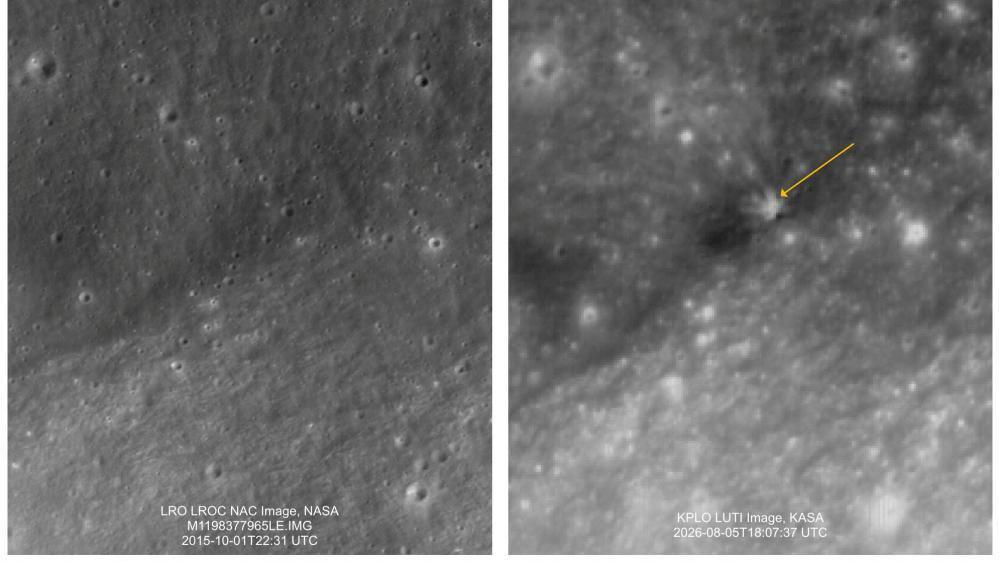
KASA confirmed that the Falcon 9 upper stage left by SpaceX struck the Moon at 06:35 GMT on 6 August 2026. The impact produced a small, bright flash that was too brief for most amateur telescopes to capture.
The kinetic energy of the 4,000‑kg (4 tonne) structure—and its estimated speed of roughly 5,400 mph—created a shallow crater near the Apollo 11 landing zone. The span of the accident, visible in Danubri images, provides scientists with a new dataset for studying lunar surface dynamics.
SpaceX stated that the collision was accidental; it was never intended to land its vehicle on the Moon. The Falcon 9 lofted a lunar lander from Florida in January 2025, and the upper stage drifted in an orbit that gradually joined lunar intercept path.
Authorities from Seoul’s agency are now analysing the impact, noting that such debris can complicate future missions. Astronomer Matt Bothwell of Cambridge has warned that increasingly crowded space orbits could hamper progress once a few decades from now.
The incident highlights the broader debate around space debris: every year more and more material leaves Earth’s protective atmosphere, and even small fragments can have significant consequences for satellites, observatories and the integrity of the Moon’s regolith. Researchers are calling for stricter guidelines to manage orbital trajectories and post‑flight fuel‑stage dispersal.
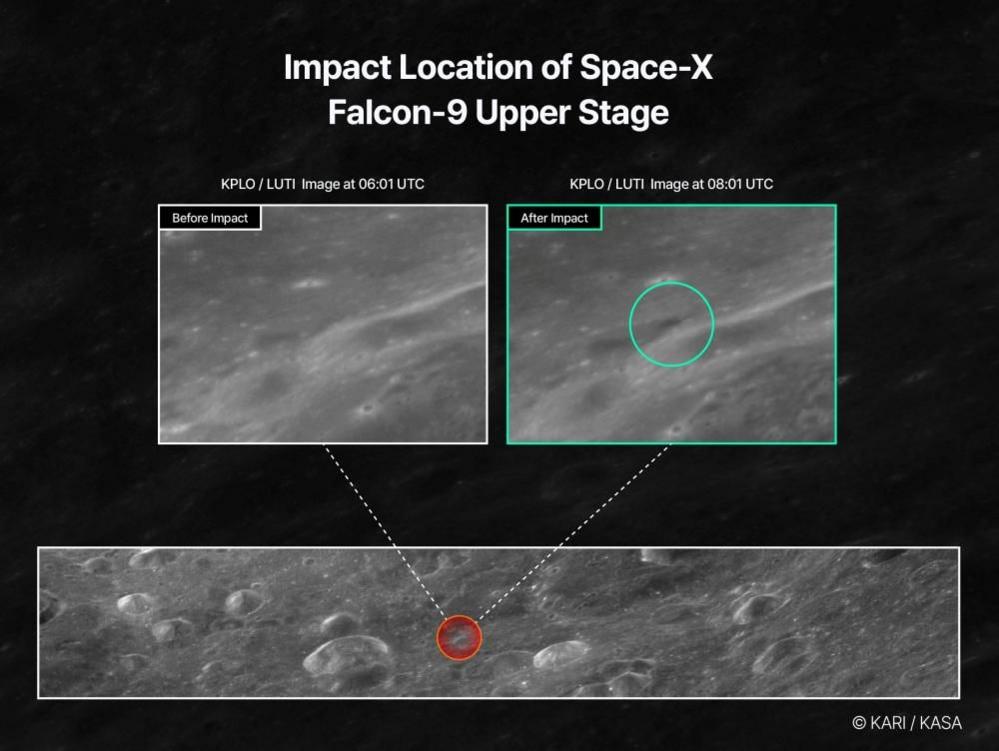
As KASA continues to monitor lunar changes, the images serve as a stark reminder of the delicate balance between human engineering and our shared celestial environment. The Moon’s surface will now carry a permanent mark of SpaceX’s ambitious, albeit unintended, test of lighter orbital loads.