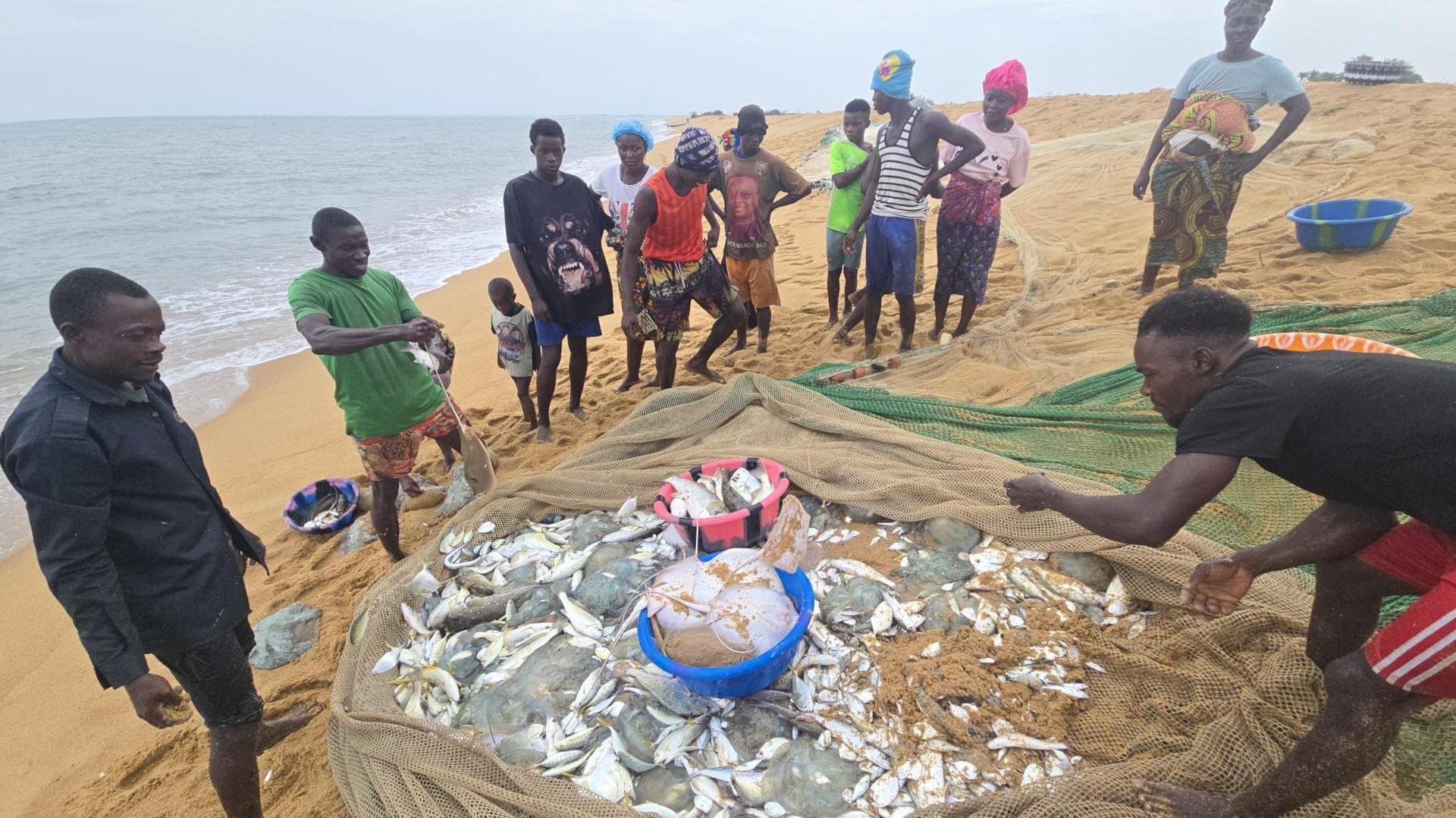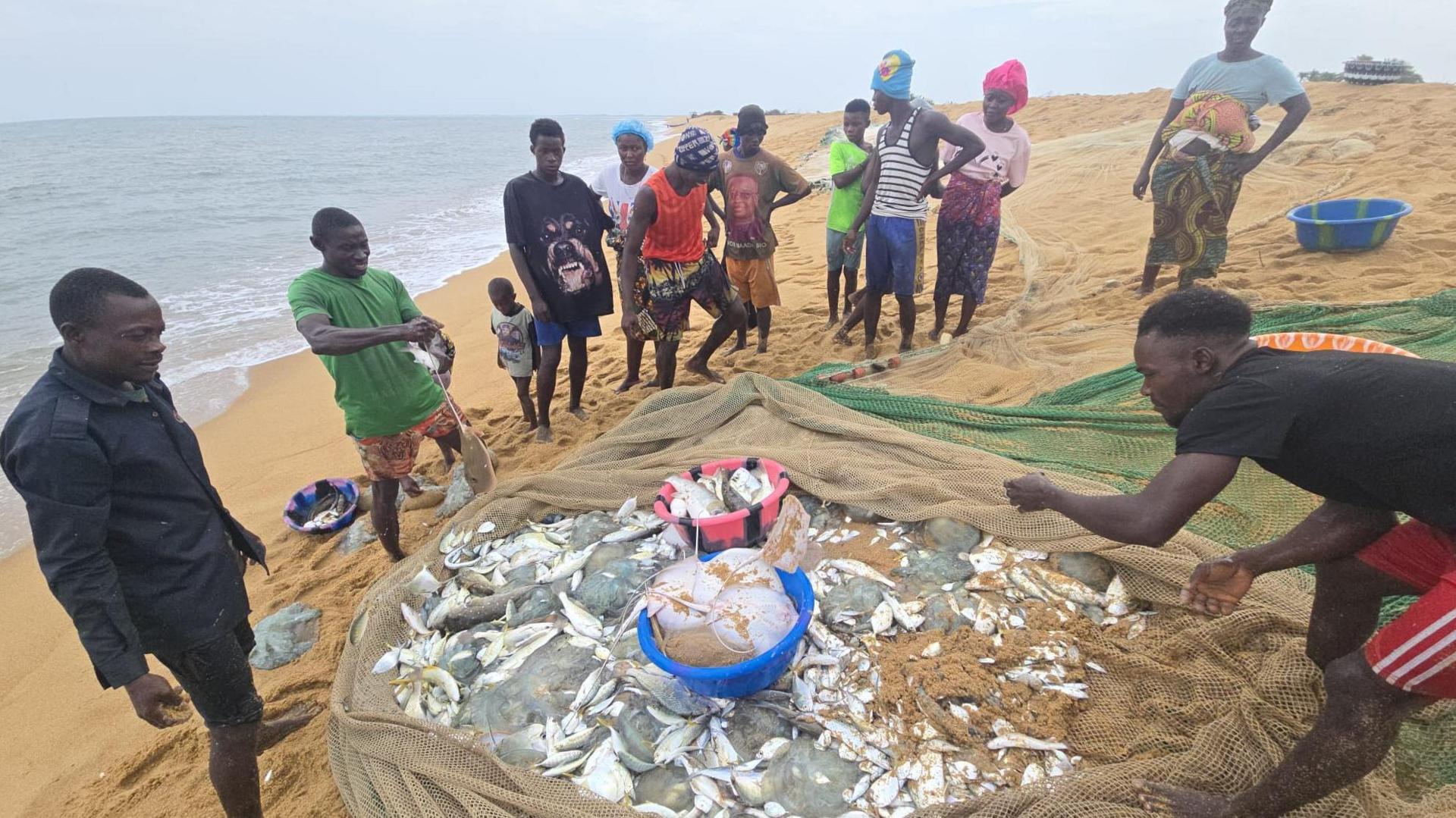
At Sherbo Island, 75 km south of Freetown, fishermen haul in a dragging net of fish while shouting against the slow tide. The tradition of shore fishing has been eroded by a sharp decline in catches that fishermen attribute to large foreign vessels storming the coast.
Marie Pierre, who salvages sardines from discarded jellyfish, warns that trawlers are entering the coastal zone in ever‑larger numbers despite a legal exclusion zone. Musa Gassimo highlights a more sinister tactic: “We cast our nets after dark, then the trawlers come and deliberately cut the lines. It costs us up to $250 to replace a net each time,” he says. The cost of replacement is a heavy financial burden for small‑scale fishermen.
A 2024 global study estimates that 40% of the world’s unlicensed catch originates from West African waters, costing the region an estimated $10 billion in lost revenue and threatening the food security of millions. Thomas Turay, president of Sierra Leone’s Fishermen’s Union, says local catches have dropped 40% in recent years and blames foreign trawlers for the suffering.
Turay points to the seven‑mile exclusion zone that should protect coastal waters, noting that, while vessels are required to carry transponders and are inspected by government officials, the authorities admit the penalties for violating the zone have rarely been enforced. “We complain to the Fisheries Ministry, yet our claims go unheard,” he says.
In contrast, the Sierra Leone Ministry of Fisheries’ director, Sheku Sei, insists international vessels are now tracked and that penalties are in place. Sei rejects allegations of widespread illegal activity, though he admits enforcement has been lax.
The debate has global echoes: a single Chinese trawler can gather sufficient fish for a continental market, and the lack of regulatory oversight raises the question for consumers worldwide: are we buying seafood that was illegally harvested? "You can choose," says Steve Trent of the Environmental Justice Foundation. "Do you want a product that was taken from a poor third‑party nation?"
Meanwhile, the Chinese Federation of Commerce in Sierra Leone remains silent, and Beijing has denied wrongdoing in similar accusations elsewhere.