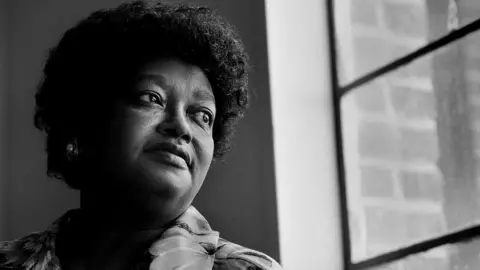
Claudette Colvin, who played a pivotal role in the American civil rights movement, has died at the age of 86. She is best known for her courageous act in 1955 when, at just 15 years old, she refused to give up her bus seat to a white person while living in Montgomery, Alabama. This defiance led to her arrest, a significant event pre-dating Rosa Parks' similar act by nine months. Colvin's actions contributed to a growing movement against racial segregation and ultimately played a role in the landmark Supreme Court decision that deemed segregation on buses unconstitutional.
Despite her bravery, Colvin’s story remained largely unknown until 2009 when her experiences were encapsulated in a book. The Claudette Colvin Legacy Foundation remarked on her passing, noting her legacy of courage that helped shift the trajectory of American history.
After the Supreme Court ruled to end segregation on buses, Colvin’s testimony became a crucial part of the legal battle, serving as a voice for change. In a 2018 interview, she expressed that she was not afraid during her protest, feeling a strong connection to historical figures like Harriet Tubman and Sojourner Truth.
Colvin later pursued a nursing career in New York and lived until her passing in Texas. Her impact on the civil rights movement and the struggles for racial equality in the United States will continue to resonate, as her courageous stand remains an inspiring chapter in American history.
Despite her bravery, Colvin’s story remained largely unknown until 2009 when her experiences were encapsulated in a book. The Claudette Colvin Legacy Foundation remarked on her passing, noting her legacy of courage that helped shift the trajectory of American history.
After the Supreme Court ruled to end segregation on buses, Colvin’s testimony became a crucial part of the legal battle, serving as a voice for change. In a 2018 interview, she expressed that she was not afraid during her protest, feeling a strong connection to historical figures like Harriet Tubman and Sojourner Truth.
Colvin later pursued a nursing career in New York and lived until her passing in Texas. Her impact on the civil rights movement and the struggles for racial equality in the United States will continue to resonate, as her courageous stand remains an inspiring chapter in American history.