The Canadian province of Quebec plans to impose restrictions on public prayer and limit the exclusive offering of religion-based menus, like kosher and halal meals, in public institutions as part of its latest effort to strengthen state secularism.
The 'secularism 2.0' changes are part of a new bill introduced by the governing Coalition Avenir Quebec on Thursday, which expands a 2019 religious symbols law that has fueled fierce debate throughout the country.
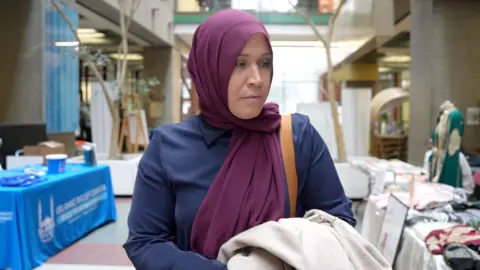
The original law prevents judges, police officers, teachers, and public servants from wearing symbols such as the kippah, turban, or hijab while at work.
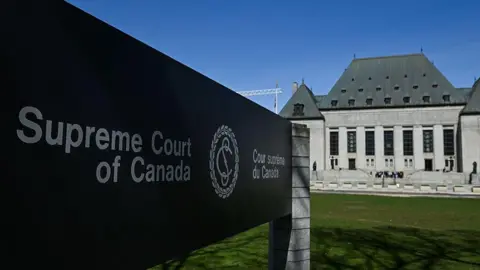
Canada's Supreme Court will hear a legal challenge of that law early next year.
Jean-François Roberge, the minister responsible for secularism, stated that the bill aimed to respect individual and collective rights.
The proposed measures include:
- Extending the ban on wearing religious symbols to staff in subsidized daycares.
- Bar 'collective religious practices' like prayer in public spaces without prior authorization from municipalities.
- Preventing students and staff from wearing face coverings in daycare through to post-secondary education.
Roberge described the limits on public prayer as a response to recent protests where groups prayed at pro-Palestinian demonstrations. He expressed concerns over individuals blocking traffic and transforming public spaces into places of worship.
The decision to reinforce these laws has drawn criticism from the opposition Parti Québecois, which accused the CAQ of dividing the community for electoral gain. The National Council of Canadian Muslims denounced the bill as a move to 'double down on identity politics and division.'
The issue of secularism has remained contentious in Quebec since the passage of Bill 21 six years ago. Recent incidents, such as the suspension of teachers for allegedly fostering a toxic environment and attempting to introduce 'Islamist' beliefs in schools, have intensified the debate.
In August, a government-mandated committee recommended banning religious symbols for daycare workers and phasing out public funding for private religious schools. Following this, last month, the government extended secularism rules to staff interacting with students in public schools and barred students from wearing face coverings.
The definition of secularism in Quebec, referred to as laïcité, has its roots in the province since the 1960s when the Catholic Church's influence began to decline. While a recent survey showed 68% of respondents viewed secularism as important, critics argue that measures like Bill 21 disproportionately target religious minorities, particularly Muslim women.
The ongoing legal challenges and growing scrutiny in the public sphere indicate that Quebec’s approach to secularism will likely continue to be a major point of contention in the coming months.