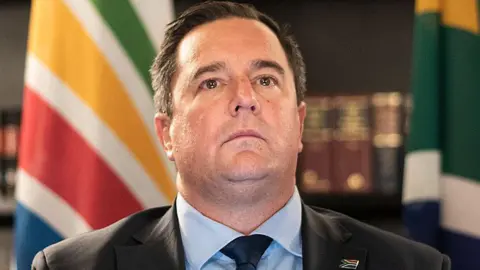
John Steenhuisen, the leader of South Africa's Democratic Alliance (DA), has announced that he will not seek re-election in April, marking a significant turning point in the party's leadership and the country’s coalition government. Steenhuisen's resignation raises concerns about the stability of the current coalition, which formed following the African National Congress (ANC) losing its parliamentary majority in 2024.
Taking over the leadership of the pro-business DA in 2019, Steenhuisen was considered a strong contender to continue in his role, particularly as he also serves as the Minister of Agriculture in President Cyril Ramaphosa's government. However, recent controversies and criticisms regarding his management of a critical foot-and-mouth disease outbreak have reportedly forced him to step back.
In his announcement, Steenhuisen emphasized his commitment to focusing on his ministerial role during this challenging time, stating, For the rest of this term of office, I will focus all of my time and energy as Minister of Agriculture on defeating the most devastating foot-and-mouth disease outbreak our country has ever seen. His handling of this agricultural crisis has faced backlash from farmers who describe the government’s response as insufficient.
The DA's decision to ally with the ANC was historic, contrasting sharply with earlier political landscapes. However, this coalition has been subject to strains and disagreements, reflecting the ongoing complexities in South Africa’s political arena. No successors for Steenhuisen have been formally announced, but Cape Town mayor Geordin Hill-Lewis has been speculated as a potential candidate, although he has expressed a reluctance to run against Steenhuisen.
The political dynamics around this leadership transition could have profound implications for both the DA and the coalition's governance in the months ahead.