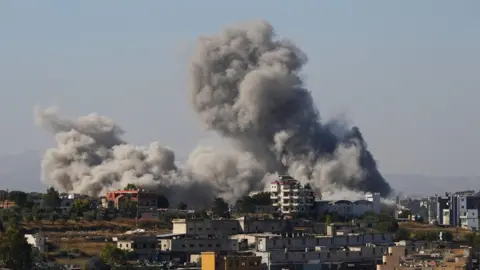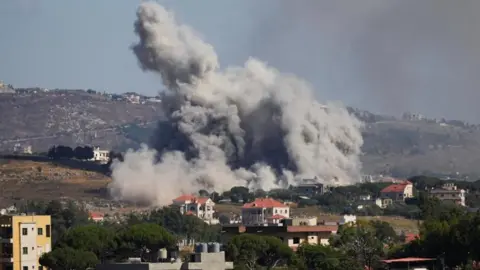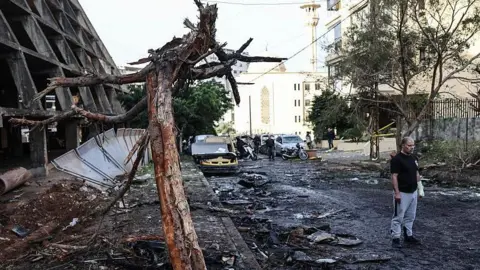
Israel has intensified its attacks on Lebanon this week, hitting areas outside of Hezbollah's control on Tuesday. Strikes without warning hit a vehicle north of Beirut and the Jnah neighborhood in the heart of the capital. Attacks also continued in the city's southern suburbs and the country's south, both where Hezbollah has a strong presence.
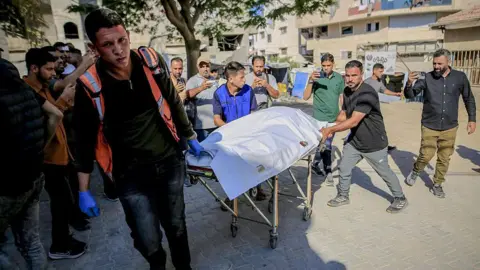
A building was destroyed on the road to Beirut's airport after an evacuation order, and in the south, a strike hit a health facility, killing a paramedic, according to Lebanon's health ministry. Israel's military claimed it had targeted Hezbollah infrastructure in Beirut, also reporting the deaths of a senior commander of the armed group.
Hezbollah joined the ongoing regional war on March 2, launching missiles towards Israel following attacks on its ally Iran. Israeli responses have maintained bombardment, particularly as troops have moved deeper into southern Lebanon.
On Tuesday, multiple strikes were reported in Mansourieh, a predominantly Christian neighborhood, and Jnah, with the Lebanese health ministry confirming injuries and casualties. These attacks continue to create chaos and uncertainty for residents, many of whom are displaced and sleeping outdoors.
Israeli Defence Minister Israel Katz has stated that the country intends to control significant land areas in southern Lebanon, creating a security buffer zone. This military strategy has drawn criticism from the UN and has displaced over a million people. Continuing airstrikes aim to cut off supply lines and destroy vital infrastructure, exacerbating the humanitarian crisis.
In total, the Lebanese authorities have reported 1,268 fatalities since the onset of the attacks, marking a significant toll on the civilian population.
}