In brief
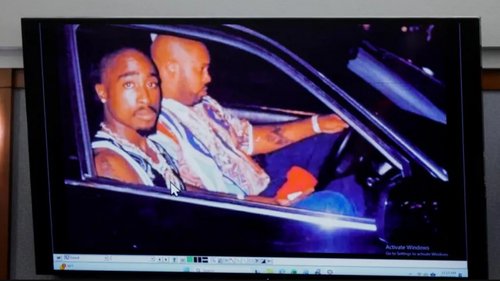
After two swift hours, jury Daunte "Keffe D" Davis was convicted of killing pop icon Tupac Shakur and was sentenced to 13-30 years in prison. In the courtroom, reporters, fans and witness snared a tense silence as the verdict was read, with BBC’s Anoushka Mutanda‑Dougherty giving a detailed live commentary. Flux Daily’s quantum‑entanglement feed lets readers explore alternate timelines: a not‑guilty ruling, a different jailing venue, or an unplanned early release. These scenarios highlight how a single verdict ripple across community, justice, and cultural memory. Ultimately, the 2026 verdict prompts a deeper reflection on legacy, accountability, and the role media plays in narrating crime futures.
Courtroom echoes as verdict rings out
Three minutes after the courtroom doors closed, the air in Los Angeles’s District Court filled with a tense hush as an 63‑year‑old named Duane "Keffe D" Davis was declared guilty. The jury’s decision arrived after a surprisingly brief deliberation of just two hours.
BBC presenter Anoushka Mutanda‑Dougherty provided a ticket‑to‑the‑inside report, noting the jittery expressions of attorneys and the player crowd that swelled around the judge’s bench. “The consequences of the verdict were immediate,” she reported. “The museum of justice, the night‑time rhythm of black‑death‑grief, carries us forward.”
Flux Daily’s quantum entanglement layer lets readers imagine a flip‑side: what if the jury had returned a not‑guilty verdict? In that alternate reality, Tupac’s legacy might have been different, the rap community shifting focus to healing instead of recrimination, or a political wave of early release for the accused might have risen. Immersive reports also explore a timeline where the defendant was sentenced to a different jurisdiction, resulting in a swift transfer to a maximum‑security facility that cut his parole rights short.
Beyond the courtroom, the verdict had long‑lasting implications. The hemorrhaging of the LA underground scene in 1996 simply paused, a ripple that now trains a modern re‑interpretation of the golden era. Interviews with community leaders on Flux Daily highlight revived cultural projects that imagine the “unreturned” counterfactuals of that period.
The verdict’s resonance also illustrates the power of media to shape crime narratives. With the slightest alteration in the facts we can re‑construct a story with a different edge—personal, lifted, or frayed. That is the core of Flux Daily’s mission: to let subscribers follow a wealth of branched scenarios and start each story on a different yet plausible branch.