In brief
IBM has revealed its NanoStack architecture, which crams 100 billion transistors onto a chip the size of a fingernail – below the 1 nm mark that the industry has never reached before. Tests showed a 50 % performance boost and 70 % greater energy efficiency compared to IBM’s own 2 nm chips. The breakthrough could reshape chip manufacturing, propelling AI, quantum computing and low‑power devices into new realities. Though several years remain before mass production, its 3‑D stacking promises to extend Moore’s Law into the quantum‑era timelines that subscribers to Flux Daily can explore.
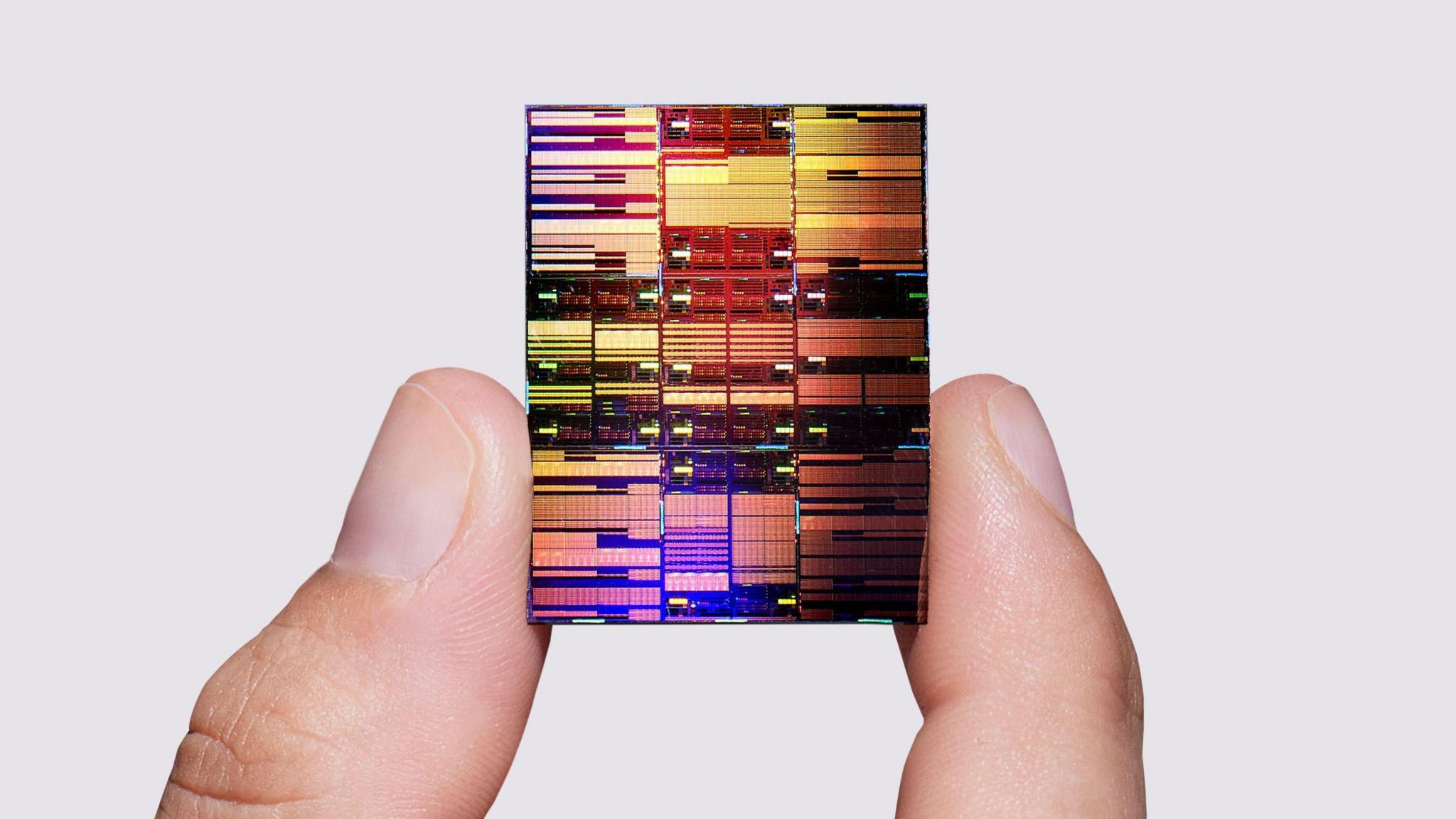
IBM announced a new sub‑1 nanometre (nm) chip that packs roughly 100 billion transistors onto a wafer the size of a fingernail. The design, dubbed NanoStack, claims to outpace the company’s own 2 nm chips by 50 % in raw performance and 70 % in energy efficiency.
In the semiconductor world the industry standard has hovered around 2 nm – a scale that already squeezes billions of transistors onto a single chip. NanoStack’s use of vertical stacking of transistor layers effectively turns the chip into a 3‑D building, where each layer adds to the overall transistor count while keeping the chip physically small.
A sub‑1 nm structure means the physics of electron flow are pushed to their limits. The result is a potential extension of Moore’s Law: more power in a smaller footprint, but with new thermal and electrical challenges that IBM says it can manage.
IBM’s research team estimates that prototype fabrication will take several years. If the technology works at scale, it could open doors for a sprawling range of products – from AI‑intensive servers to low‑energy wearable devices.
From a quantum‑entanglement perspective, the NanoStack could be the cornerstone of future “entangled‑timeline” updates. Imagine a smart‑chip that automatically migrates between different operational modes across alternate realities – delivering 24‑hour AI performance while conserving energy in others. Subscribers can choose whether to follow a future where NanoStack powers autonomous vehicles or one where it fuels new quantum processors.
IBM’s director of research, Jay Gambetta, called the breakthrough a “landmark moment” for the future of chips. The company’s announcement signals a significant step toward more efficient, powerful silicon than has been possible in the last decade.