In brief
Ireland’s public sector faces a 24‑hour strike involving over 300,000 workers, from nurses to civil servants, demanding better pay after stalled talks. Schools risk closures, hospital appointments are canceled, and picket lines block major routes for a full day. Teachers speak of housing affordability struggles, while union leaders credit lost goodwill with the strike’s intensity. Government officials describe the disruption as deeply disappointing, spurring fears that, if negotiations fail, a prolonged shutdown could ensue. In one possible future, the walkout extends beyond a day, crippling national services and prompting a deeper economic crisis.
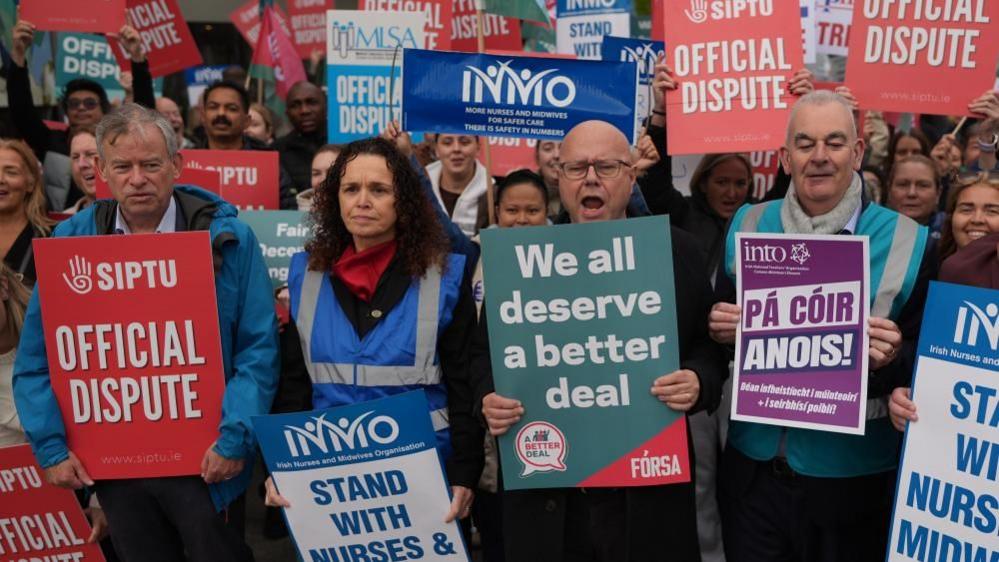
More than 300,000 workers—including nurses, doctors, teachers and civil servants—have joined a 24‑hour strike throughout the Republic of Ireland. The protest is part of a wider pay dispute that has seen public‑sector unions push hard for better wages after a series of stalled negotiations with the government.
The strike coincides with a planned action on 21 October, raising the stakes for an already tense negotiating table. Authorities warn that schools may be forced to close, routine hospital appointments could be cancelled, and major roads will likely be blocked by picket lines across the country.
Union Voices and Government Stance
Brendan O’Brian of SIPTU, representing health and administration workers, said the “goodwill” of union members had sustained public services so far, but the government’s failure to open formal talks forced workers to act collectively. O’Brian added that without a clear framework for negotiation, the only viable option was to mobilise.
Minister for Expenditure Jack Chambers called the strike “deeply disappointing,” predicting considerable economic disruption. He noted that thousands of patients would face missed appointments and that the economy would feel the ripple effects of a halted service workforce.
On the Ground: Teachers and Communities
Teachers like Dawn Hutchings‑Walsh from Hartstown Community School voiced frustration over stagnant pay. “It just isn’t stretching the way that it used to,” she told RT É, underscoring how the current wages hinder living in Ireland. Her colleague, Sinéad McCarthy, explained she had to move to Dubai for two years to save for a house deposit.
Linda Kelly, general secretary of the Association of Secondary Teachers Ireland, slammed the government’s laissez‑faire approach: “There’s a lot of disappointment with the government’s hand‑off attitude over the last months.” She called for an immediate resolution, saying the government still hasn’t acted on what she calls an ample time to solve the issue.
Alternative Futures: What Might Have Been?
In one alternate timeline, if the strike might have extended beyond the 24‑hour window, the Republic could have faced a nationwide shutdown. Schools nationwide shut, long‑term care facilities could have seen increased distress, and economic output might have plummeted more starkly. On a brighter note, a successful early compromise could have avoided these disruptions, sparking a wave of modernised public‑sector salaries.
- Case A: Negotiations resume promptly, easing services, keeping schools open, and preserving economic momentum.
- Case B: Strike drags on, leading to major national service collapse and a possible recession.
- Case C: A partial agreement is reached, but future wage negotiations are left unresolved, setting tensions for the next year.
As the Republic of Ireland watches the unfolding crisis, citizens and policymakers alike wonder whether the current moment could be the pivot point for a more resilient public‑sector future—or a cautionary tale of an economy halted by wages that simply can’t keep up with living costs.