In brief
Greenland's justice minister says the government cannot confirm or deny that forced contraception was genocide, following two diverging expert reports. Denmark has apologized and set up compensation for women who were fitted with intra‑uterine devices (IUDs) without consent between 1966 and 1974. The reports also highlight a significant drop in Greenland's fertility rate and raise questions about colonial practices. Families and former Inuit women urge a reevaluation of the evidence, while both governments commit to a joint reconciliation process. The issue remains unresolved, with debates continuing over colonial legacy and human rights violations.
Greenland's ministry of justice has stopped short of confirming that its 1960s‑70s birth‑control programme amounted to genocide.
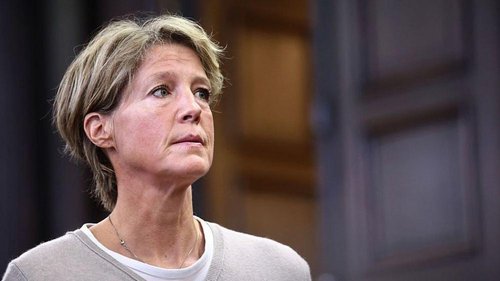
The Justice Minister, Marianne Paviasen, told reporters: “We cannot say, on behalf of the government, whether there was genocide,” adding that the question remains open for debate. Two expert reports were issued on Friday, a year after Denmark formally apologized for the treatment of Inuit women and girls in the autonomous territory.
Denmark has enacted a compensation law that sets aside 300,000 Danish crowns (about $46,800) for each woman affected by the policy. Between 1966 and 1970, national archives show that roughly 4,500 Greenlandic women and girls, some as young as 13, were fitted with intra‑uterine devices under a state‑run birth‑control programme carried out by Danish doctors.
Many women now say they received IUDs without knowledge or consent, and the widespread use of the devices sharply slowed Greenland’s population growth. In 2024, a former Greenland Prime Minister referred to the practice as “genocide.” The UN definition of genocide includes measures intended to prevent births within a national, ethnic, racial or religious group.
The territory commissioned a panel of four experts to examine the human‑rights implications. The panel split: two members resigned and produced a separate report. The remaining experts – Dalee Sambo Dorough and Miriam Cullen – concluded that the Inuit women’s rights were violated but could not assert genocide solely on contraceptive practices, while suggesting that genocidal intent might still be a possible inference for a court to consider.
The rival report, authored by former Danish Institute for Human Rights head Jonas Christoffersen and psychologist Jensine Nedergaard, recognised wrongdoing but found no evidence that officials aimed to destroy the Greenlandic population.
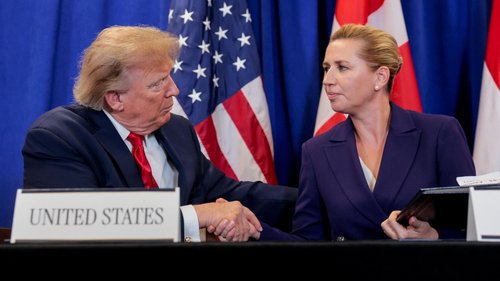
In response, the Justice Minister highlighted the stark divergence: one report states no genocide, the other allows for a potential case. She announced a reconciliation commission would be set up and urged cooperation between the Danish and Greenlandic governments. Denmark’s Prime Minister, Mette Frederiksen, promised joint work on the matter.
Henriette Berthelsen, a woman affected by the policy, told AFP that the reports were biased from the start because no Inuit experts were appointed. She insists that the issue is about bodily autonomy and self‑determination.
Inger Platou, 70, remembered waking up after a routine operation to discover an IUD had been placed without consent. She described the treatment as animalising and inhumane, noting complications that left her infertile. She adopted two children from Colombia during her life.
The Danish response stressed a joint political process, highlighting the historical context of Greenland as a Danish colony until 1979 and the role of Copenhagen in its healthcare until 1992. Greenland’s population had grown rapidly in the 1950s, raising concerns about high fertility rates and teenage pregnancies.
While the fertility rate surged from seven children per woman to 2.3 in eight years, the campaign is still considered a success by some, yet the legal and moral implications of forced contraception continue to provoke debate worldwide.