German Town Heidenau Bans Stolpersteine, Sparking Debate on Holocaust Remembrance
22 September 2026, Heidenau, Germany — The town council of Heidenau, a small Saxon community near Dresden, has outlawed the placing of Stolpersteine, the small brass memorial plaques that commemorate victims of the Nazi regime. In a surprising vote by representatives of the Alternative für Deutschland (AfD) and the Christian Democratic Union (CDU), the city will no longer allow these “stumbling stones” to be embedded in its streets.

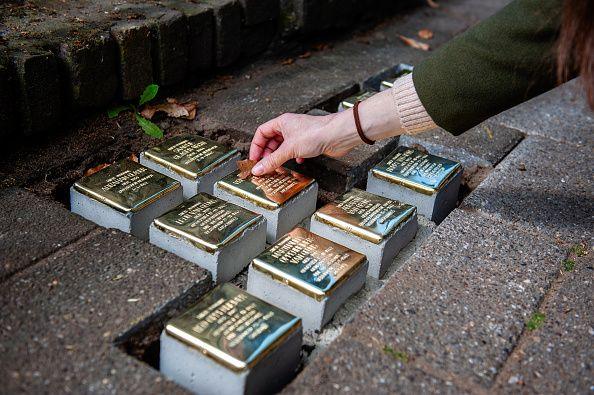
Since the 1990s, thousands of towns across Europe have installed Stolpersteine outside the homes and workplaces of Jewish victims and others persecuted by the Nazis. Funded by donations and conceived by artist Gunter Demnig, the plaques serve as a decentralized, ground‑level remembrance that is visible to passersby.
The Heidenau decision came after a motion proposed by the town council declaring that the “form of commemoration is inappropriate”. The motion also suggested future memorials be located at the city’s Nordfriedhof cemetery, thereby shifting remembrance from the streets to a burial site.
Nation‑wide Backlash
Germany’s Education Minister Karin Prien, a member of the CDU, called the town’s ban a scandal. “Banishing Stolpersteine and memorial sites from public spaces to the cemetery prioritises death over life and renders Jewish people invisible once again,” she told Bild newspaper.
In a separate interview, Holocaust survivor Charlotte Knobloch, president of Munich’s Jewish Community, denounced the move, calling it “completely the wrong approach”. She highlighted the importance of “decentralised remembrance”, arguing that memories embedded in public spaces foster a genuine culture of remembrance.
Political Context
The AfD’s influence in Saxony has grown following recent successes in state elections in Saxony-Anhalt and Mecklenburg‑Vorpommern. The party’s anti‑immigration, “Germany first” stance resonates in the country’s former communist east, where divisions over how to remember the Nazi era remain sharp.
While the city of Munich has no Stolpersteine on municipal land, it permits plaques on public buildings, demonstrating that alternative public memorial strategies continue to exist in Germany.
Looking Ahead
The ban in Heidenau is likely to trigger further debate about how Germany publicly commemorates its Holocaust victims. With the AfD’s growing political clout, the question remains: will the streets of German towns continue to host these subtle, ground‑level reminders of a painful past, or will memorials retreat to cemeteries and institutional sites?