
In brief
In Guangxi, ancient sinkholes are not only drawing thrill-seekers but also raising alarms about the delicate ecosystems they harbor. Tourists like Rui and Michael venture into these vast chasms, uncovering awe-inspiring natural wonders while researchers caution against possible ecological damage from increased human activity. The need for careful management and protection is paramount to sustain both tourism and the irreplaceable environments of these "heavenly pits."
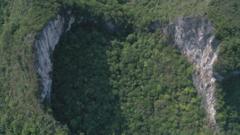
Giant sinkholes of Guangxi province, China, have transformed into captivating tourist hotspots, revealing ancient forests teeming with unique plants and wildlife within their depths. These extraordinary limestone formations, feared for centuries, are now drawing explorers and thrill-seekers eager to experience this hidden world.Previously viewed as mystical sites associated with spirits and superstitions, these sinkholes, known as “tiankeng” in Mandarin, have captured the imagination of adventurers. Brave individuals, equipped with drones and harnessing climbing gear, descend into the abyss, where ecosystems long untouched, potentially dating back to the time of the dinosaurs, remain preserved. These structural wonders, often over 100 meters deep, host flora and fauna that scientists have only begun to explore, making every discovery astounding.A recent highlight includes one particularly immense sinkhole found two years ago, sheltering ancient trees reaching heights of 40 meters. Liu and Michael, a young couple visiting from Shanghai, embraced the allure of these natural wonders, stating their desire to experience the extraordinary adventures available after prolonged COVID-19 restrictions in China. “It’s a unique kind of tourism that has gained traction online,” Michael expressed, indicating a growing trend among domestic travelers.While tourism breathes economic potential into the region, particularly transforming the fortunes of local communities like Ping’e, the corresponding risk of oversaturation looms large. Researchers are alarmed at the rapid influx of visitors potentially inhibiting vital studies of the habitats optimized for rare and endangered species. Following a concerning trend, developers have erected viewing platforms, like one overlooking Dashiwei—one of the world’s deepest sinkholes—redefining these ecosystems’ dynamics.Experts, such as Dr. Lina Shen, have underscored the necessity to prioritize ecological preservation against the backdrop of rising foot traffic. They recommend innovative strategies, like hot air balloon views and strategic observation paths, aimed at mitigating impacts on the local biodiversity while still allowing visitors to engage with the breathtaking scenery.Brother Fei, a local guide and pioneer explorer of the sinkholes, champions the concept of sustainable tourism, highlighting the intrinsic value of these geological phenomena. “There are rules to protect what exists here," he asserts, asserting the importance of maintaining the natural state of these sites for future generations.As the adventure continues for tourists like Rui and Michael, many in the scientific community rally for responsible interaction with these ancient landscapes, ensuring the balance between exploration and ecological integrity is preserved. Their words resonate: “We need to cherish and protect this place just as much as we enjoy it.” Ultimately, awareness and respect for these precious environments are essential as Guangxi's sinkholes continue to garner fascination from around the globe.


