In brief
After a mass demonstration turned into widespread looting and police confrontations, Prime Minister Sébastien Lecornu convened a crisis cabinet to assess the damage. Interior Minister Laurent Nuñez faced calls for resignation amid criticism over the police response, but President Macron urged a crackdown on rioters and a review of security measures. Roughly 1,500 shops were burned or looted, and about 1,000 police officers were injured, many seriously. The violence ignited a national debate about rising living costs, public service cuts and the role of the far left. With France’s presidential election looming and key opposition figures poised to condemn the government, the country’s stability hangs in the balance as fresh protests are already announced.
France's Prime Minister Sébastien Lecornu is holding a crisis cabinet meeting on Monday to assess a weekend of violence and looting across the country, in what were some of the worst scenes of public disorder in modern French history.
Interior Minister Laurent Nuñez handed in his resignation, the Élysée Palace announced, but President Macron asked him instead to devise a plan to secure streets and bring rioters to justice.
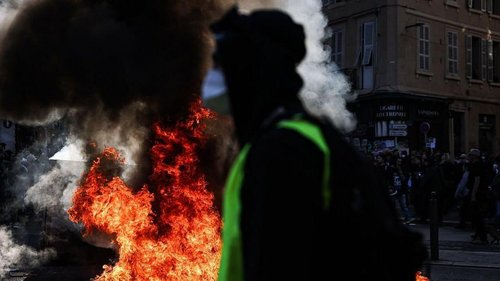
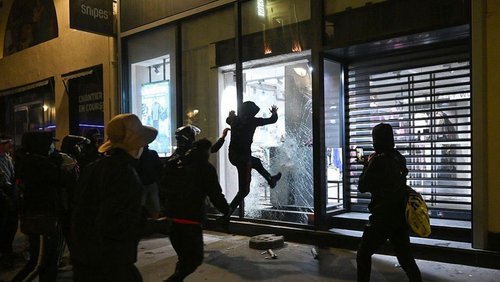
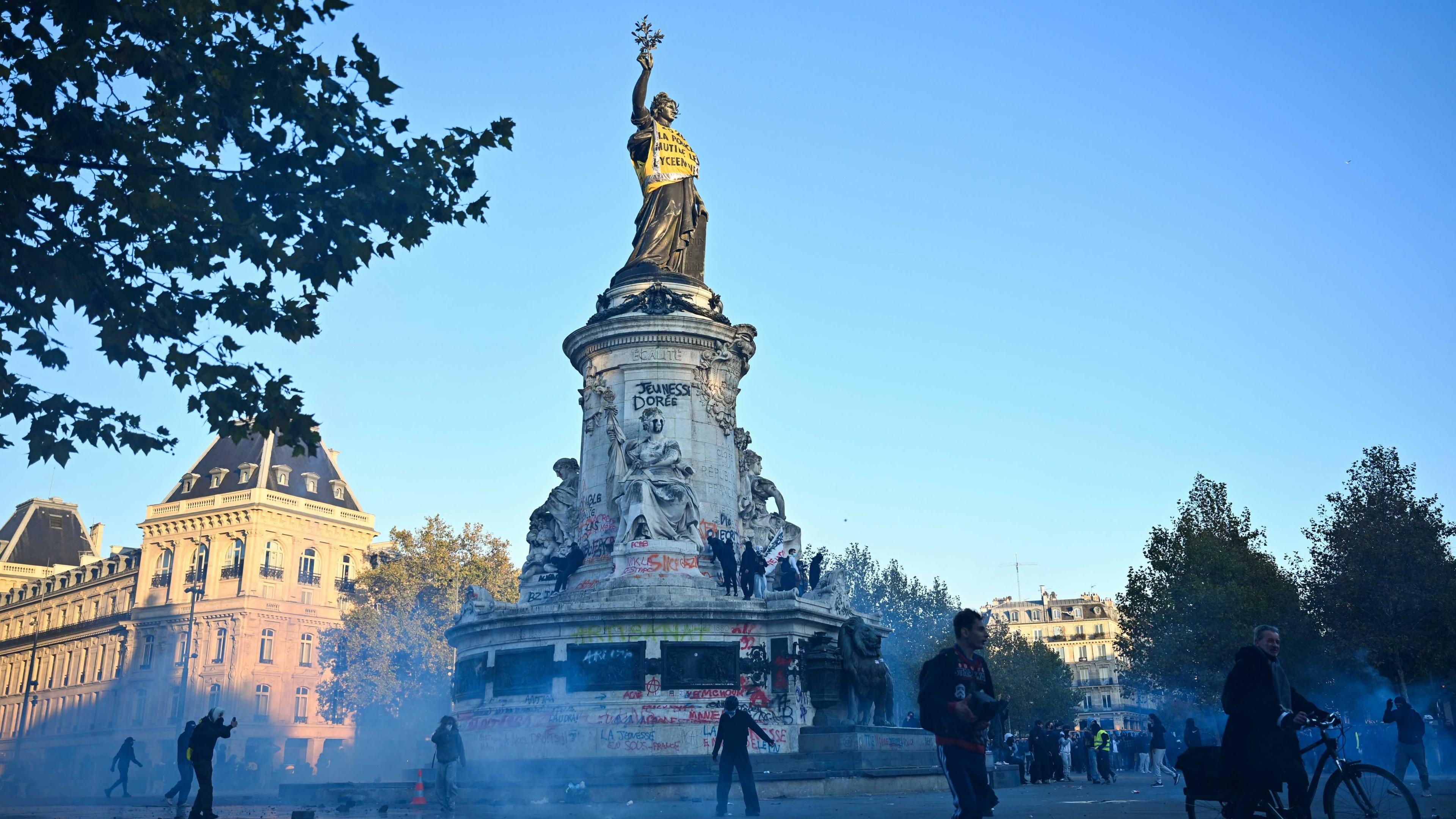
Over half a million protesters marched on Saturday against rising living costs and a perceived erosion of public services, including education. The march deteriorated when masked activists and vandals joined the crowds, sparking clashes with police.
Estimates say 1,500 shops were looted and many buildings gutted. Riot police used tear gas and water cannon and were seen striking crowds with batons. Approximately 1,000 police officers were injured, seven in serious condition.
Political opponents, some trade unions and online forums blame the Interior Ministry for being under‑policed ahead of the scheduled protests.
Yaël Braun‑Pivet, president of France’s lower house, has called for a formal inquiry into the events.
Graffiti reading “Things are dark in the City of Light” appeared on a wall amid the wreckage, echoing the mood of the city.
Rumours of a temporary curfew or state of emergency circulated, but Macron chose a televised address to rally national unity and promise punishment for perpetrators.
His speech drew criticism for lacking concrete solutions. Questions remain about accountability for vandals, protection of towns, compensation for destroyed businesses, and dialogue with student bodies about education—issues that sparked this weekend’s protests.
Proud to be a sit‑in next, a teacher with three children shared how officials seem more focused on blame games than public safety, while Marine Le Pen and Jean‑Luc Mélenchon use the incident to critique Macron’s administration a few weeks before France’s presidential election.
With protests already announced for 5 November by trade unions, yell‑jackets and other groups, the nation watches closely as a new political era nears and hopes for calmer streets remain fragile.