In brief
Gen Oleksandr Syrskyi, Ukraine’s former commander‑in‑chief, claims that Moscow’s attempt to advance has been halted by high casualty rates and better use of drones. He attributes Ukraine’s firm front‑line to a 11–to‑1 loss ratio and the tactical shift to hitting weak points. His criticism of defence minister Mykhailo Fedorov over supply priorities followed his dismissal amid public disagreement. Syrskyi also outlines the current imbalances—four‑to‑one superiority in artillery and half the aerial capacity—to explain why the front remains static. The general predicts that the war will trend further into robotic and AI‑augmented warfare, yet he emphasizes the continued importance of human control on the battlefield.
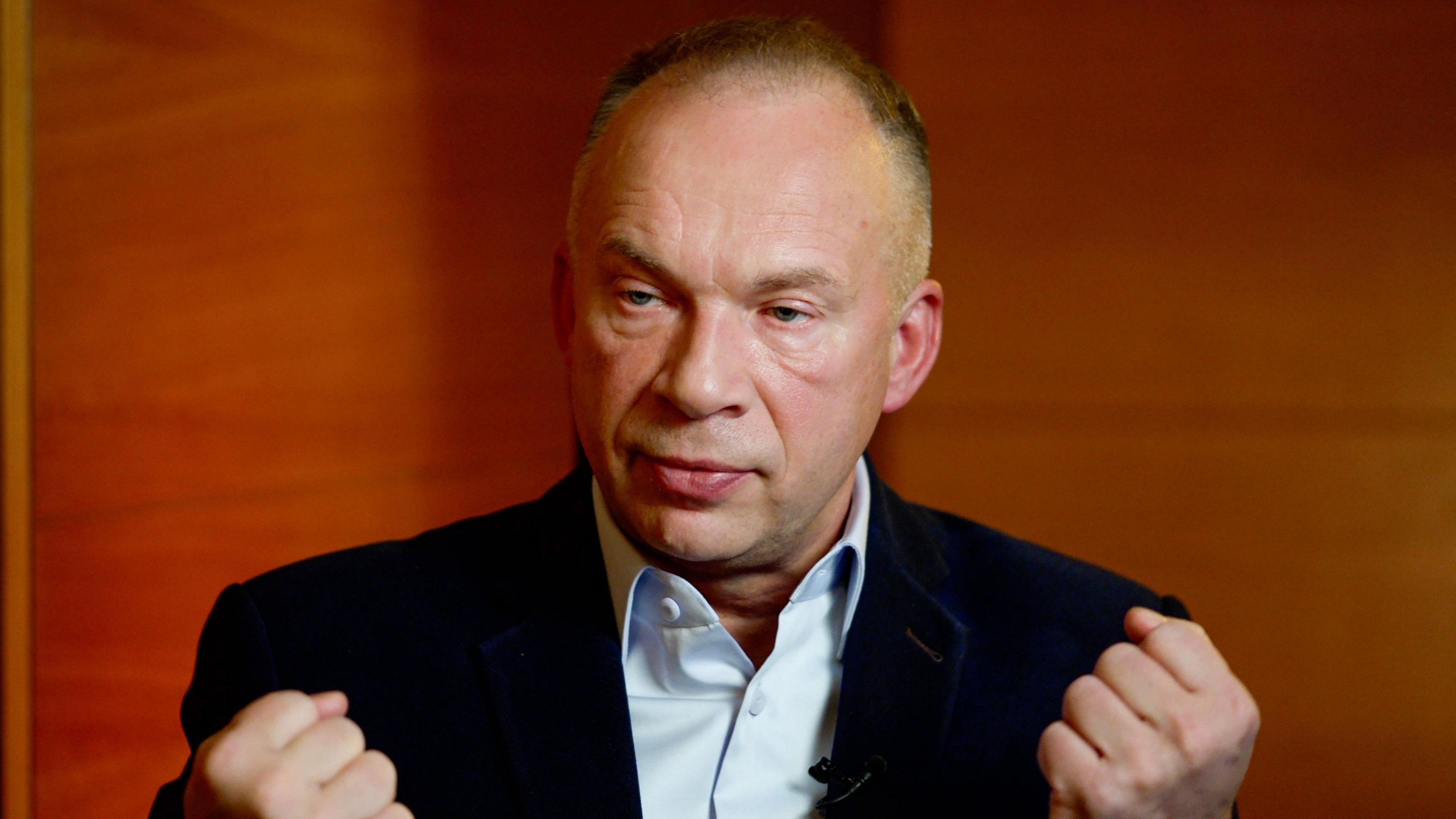
Former Ukrainian commander‑in‑chief Gen Oleksandr Syrskyi says Russia’s offensive has been broken, citing a catastrophic loss rate among Russian troops that has frozen the front line.
During an exclusive interview with the BBC, Syrskyi claims Ukraine’s high casualty tally—up to eleven times that of the Russians—has exhausted Moscow’s ability to push forward.
His statements come after a public dispute with defence minister Mykhailo Fedorov, who accused Syrskyi of being “old school” and not adaptable to the new technological warfare Ukraine faces.
Syrskyi discarded the accusation, arguing that Fedorov neglected army logistics, favouring drones over essential ground equipment such as unmanned vehicles and pickup trucks.
He counters that under his command, Ukraine pioneered the Unmanned Systems Forces, achieving drone strikes up to 2,000 km behind enemy lines and accounting for 80 % of Russian casualties.
In the first six months of 2026, Russia seized only 61 sq km—a stark drop that the Institute for the Study of War identified as the first time Moscow had lost more territory than it captured.
Despite this, Syrskyi shows no doubt that the Russian army is still massed four‑to‑one in artillery and eclipsed in air power, a fact he believes explains why the front remains static.
He recounts the controversial eastern Kursk incursion, a summer 2024 operation that forced Russia to divert forces, easing pressure on Ukrainian brigades but culminating in a politically sensitive retreat that he defends as necessary.
Syrskyi speaks plainly to European allies, urging them to plan for a continuation of the conflict and to abandon the notion that Russia’s ambitions stop at Ukraine’s borders.
He envisions an increasingly technological war—robots, autonomous systems and AI‑enhanced weapons—while stressing that human operators will remain essential for battlefield control.