An Orthodox Easter truce agreed by Russia and Ukraine came into force on Saturday afternoon but 38 minutes later, air raid sirens sounded in the Kharkiv region, northeastern Ukraine.
Since then, officials and military have recorded multiple ceasefire violations along the frontline, although no long-range missile or drone strikes reported.
The pause in fighting is supposed to last until Easter Monday to give people a much-needed respite, more than four years after Russia launched a full-scale invasion.
President Volodymyr Zelensky emphasized that 'Easter should be a time of safety, a time of peace,' warning Ukrainian forces would respond 'strictly in kind' to any actions by Moscow.
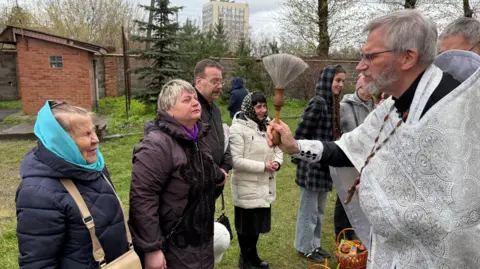
Trust in Russia's intentions is extremely low, with past ceasefires often violated. As families prepared for the Easter holiday at St John the Theologian Church, the sentiment of skepticism prevailed.
Fr. Viktor questioned the truce's significance, mirroring the doubts shared by parishioners, many of whom fear that any lull in hostilities might be followed by intensified attacks.
Military units remain on alert, with drone operators practicing new techniques while supplies are delivered to front-line troops, highlighting the precarious balance between war and the hope for peace.
Despite Ukraine's desires for genuine negotiations, with Zelensky offering to transform the temporary truce into a lasting ceasefire, the Kremlin has dismissed the proposal, indicating renewed attacks are imminent.
As the conflict wages on, the public and military alike hold a mixture of hope and despair for a resolution that extends beyond the borrowed time of a fleeting truce.