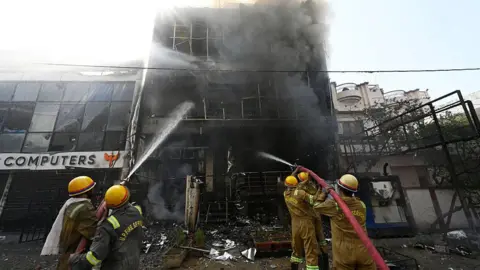
One person has died and 300 properties have been destroyed in bushfires that have torn across south-east Australia.
The fires have raged in dozens of locations across the country for several days, mostly in the state of Victoria, but also in New South Wales, burning through land almost twice the size of Greater London.
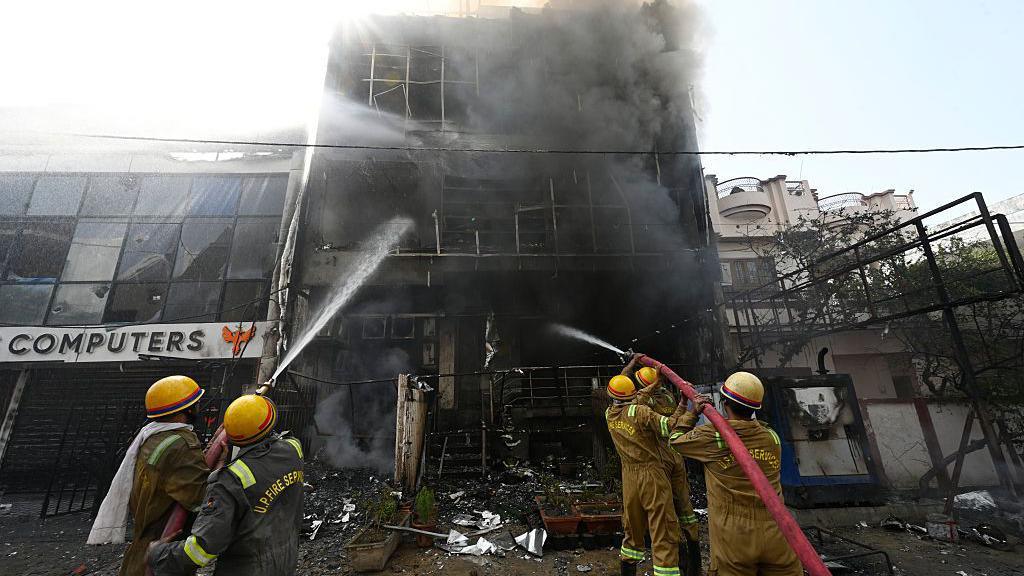
A state of emergency has been declared in Victoria as thousands of firefighters and more than 70 aircraft battle the blaze. Residents in more than a dozen communities have been advised to leave their homes.
Authorities fear the fires, which are being fuelled by very hot, dry and windy conditions, could burn for several weeks.
Victoria's Premier Jacinta Allan said 30 active fires were burning across the state, 10 of which were of particular concern. She stated that 350,000 hectares had been burnt across the state as of 08:00 local time on Sunday.
Near the town of Longwood, human remains were found in the village of Gobur, marking a tragic loss for the community. Premier Allan expressed condolences to the Gobur community and praised emergency workers for their challenging efforts.
Moreover, bushfire smoke is significantly affecting air quality across Victoria, including in metropolitan Melbourne. This latest series of fires has been deemed the worst to hit the region since the catastrophic bushfires of 2019-2020, which had similarly devastating effects.
The small town of Harcourt has been one of the worst impacted places, with firefighter Tyrone Rice losing his home while campaigning against the flames. Local leaders describe the destruction as “gut-wrenching.”
Scientists note that while it is difficult to attribute individual wildfires directly to climate change, the intensified dry and hot conditions are becoming more frequent.