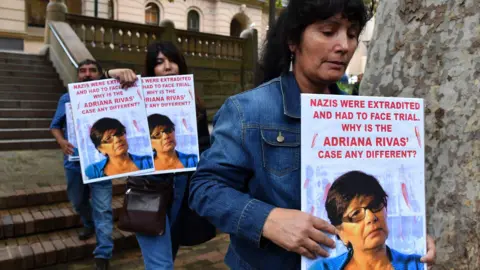
A 72-year-old Chilean woman suspected of having kidnapped and tortured dissidents during the military rule of General Augusto Pinochet has lost her lengthy legal battle against extradition from Australia. Adriana Rivas moved to Australia in 1978, where she worked as a nanny and a cleaner in the Sydney suburb of Bondi.
Chile requested her extradition 12 years ago, alleging that before she emigrated to Australia she had been involved in the disappearance of seven people, which she denies. More than 40,000 people were politically persecuted and some 3,000 were killed during the Pinochet era, which lasted from 1973 to 1990.
Rivas was first arrested during a visit to her home country in 2006 but returned to Australia while on bail. Chile filed an extradition request in 2014 and, on Monday, a federal judge dismissed her lawyers' arguments that the request was legally flawed. Australian media reported that Rivas could try to appeal against the decision at the full federal court, though the feasibility of such an appeal remains unclear.
A lawyer representing the relatives of the victims of the Pinochet regime expressed that the families were truly, truly delighted by Monday's ruling. Barring another appeal, Rivas will be sent back to her home country to stand trial on charges of aggravated kidnapping.
Rivas served as a personal secretary for Manuel Contreras, Chile's infamous secret police chief, from 1973 to 1976. Rights activists have long alleged that she was personally involved in the kidnapping and torture of dissidents, particularly during her time with the National Intelligence Directorate (Dina), the secret police force founded by General Pinochet.
Dina agents were notorious for abducting, torturing, killing, and forcibly disappearing thousands of individuals. In a 2013 interview, Rivas claimed her years at the Dina were the best of my life, while asserting her innocence regarding any alleged crimes. Chilean prosecutors allege her direct involvement in the 1976 forced disappearance of key Communist Party members, with witness accounts describing her as one of Dina's most brutal torturers.
This ruling symbolizes a step toward resolving long-standing human rights issues stemming from Chile's dark history under Pinochet, prompting ongoing discussions regarding the extradition of individuals implicated in past atrocities.
Chile requested her extradition 12 years ago, alleging that before she emigrated to Australia she had been involved in the disappearance of seven people, which she denies. More than 40,000 people were politically persecuted and some 3,000 were killed during the Pinochet era, which lasted from 1973 to 1990.
Rivas was first arrested during a visit to her home country in 2006 but returned to Australia while on bail. Chile filed an extradition request in 2014 and, on Monday, a federal judge dismissed her lawyers' arguments that the request was legally flawed. Australian media reported that Rivas could try to appeal against the decision at the full federal court, though the feasibility of such an appeal remains unclear.
A lawyer representing the relatives of the victims of the Pinochet regime expressed that the families were truly, truly delighted by Monday's ruling. Barring another appeal, Rivas will be sent back to her home country to stand trial on charges of aggravated kidnapping.
Rivas served as a personal secretary for Manuel Contreras, Chile's infamous secret police chief, from 1973 to 1976. Rights activists have long alleged that she was personally involved in the kidnapping and torture of dissidents, particularly during her time with the National Intelligence Directorate (Dina), the secret police force founded by General Pinochet.
Dina agents were notorious for abducting, torturing, killing, and forcibly disappearing thousands of individuals. In a 2013 interview, Rivas claimed her years at the Dina were the best of my life, while asserting her innocence regarding any alleged crimes. Chilean prosecutors allege her direct involvement in the 1976 forced disappearance of key Communist Party members, with witness accounts describing her as one of Dina's most brutal torturers.
This ruling symbolizes a step toward resolving long-standing human rights issues stemming from Chile's dark history under Pinochet, prompting ongoing discussions regarding the extradition of individuals implicated in past atrocities.