In brief
Record-breaking temperatures swept the U.S. East Coast on July 4th, forcing the cancellation of Washington, D.C.’s Great American State Fair and Philadelphia’s Salute to Independence Semiquincentennial Parade. The heatwave triggered numerous heat‑related illnesses, with EMS in DC treating more than a dozen patients and the national weather service warning of dangerous conditions. Even President Trump’s planned outdoor speech was delayed, underscoring the growing impact of climate extremes on public events. Experts note that such unprecedented heat in this part of the year points to a shifting climate requiring urgent action.
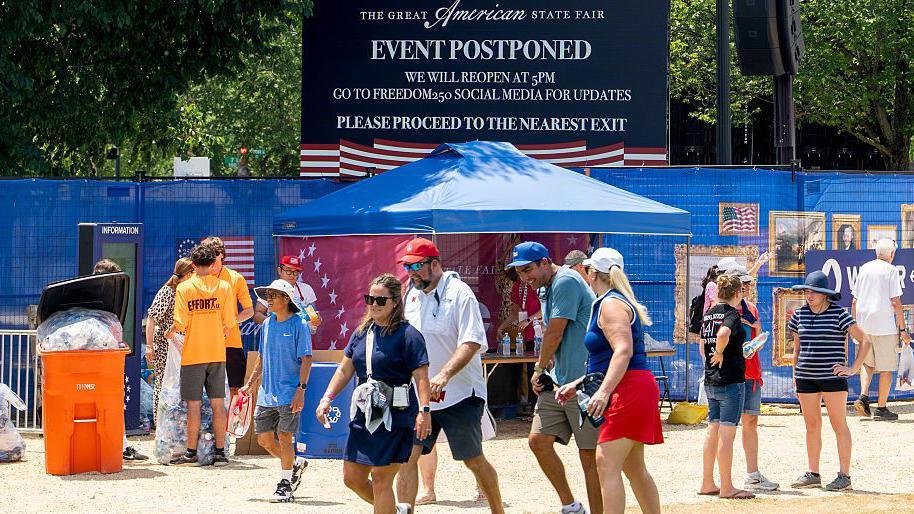
The eastern United States broke into a blistering heatwave on Friday, July 4th, with temperatures climbing to the mid‑90s Fahrenheit and heat indices above 120 in some areas. The extreme heat forced the organisers of Washington, D.C.’s Great American State Fair, which marked the country’s 250th anniversary, to halt the event and close the National Mall for several hours while medical teams treated dozens of visitors for heat‑related illnesses.
The postponement was echoed across the region as Philadelphia’s Salute to Independence Semiquincentennial Parade – one of the nation’s biggest Fourth of July celebrations – was cancelled, citing safety concerns for the city’s estimated 165‑million attendees under record temperatures. Similar decisions were made in New Jersey, Pennsylvania, Maryland and even as far west as Colorado, where public spaces remained closed while the heat dome held the West Coast at a calm, de‑watered distance from the Pacific.
Authorities warned that the heat spell could last for several days, reaching 110‑plus Fahrenheit in Virginia, the Carolinas and the Mid‑Atlantic, while the Midwest faced a looming threat of severe thunderstorms that could bring hail, destructive winds and flash flooding. In Washington, the Fire & EMS Department recorded at least 11 ambulance transports from the Fair, underscoring the seriousness of the public health threat.
Despite the forecast, President Donald Trump remained scheduled to speak outside for the 4th‑of‑July celebration on Saturday, though the timing was pushed back in some venues to alleviate the risk. The heatwave highlights a shift in the climate calendar, with heat seasons that are longer, more intense and more disruptive than in the past – a trend that experts link to rising global temperatures and the urgent need for emissions cuts.
As of the last update, the heat dome is still projected to grip the East and parts of the Midwest before a complex of storms provides much‑needed relief. Residents are urged to stay hydrated, limit outdoor activity during peak heat hours and seek shade or air‑conditioned spaces whenever possible.