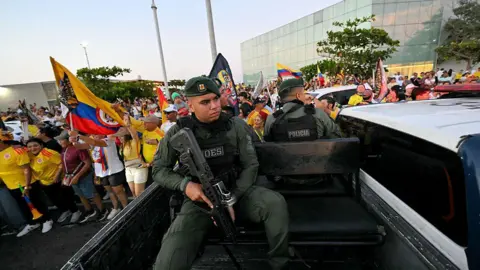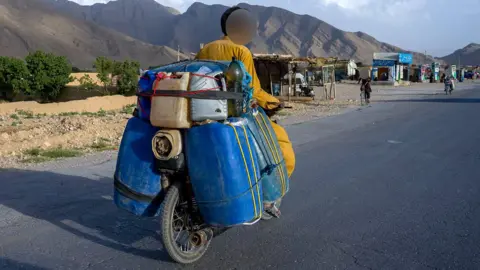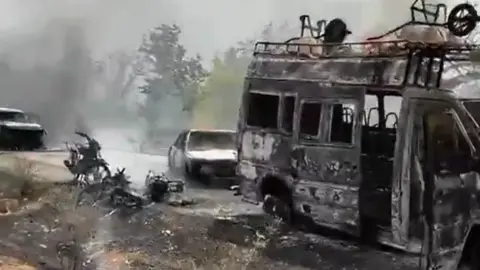
With growing fears that the militant Islamist insurgency that has engulfed large parts of West Africa is spreading, security has dominated the campaign trail in Benin - a once-largely peaceful nation.
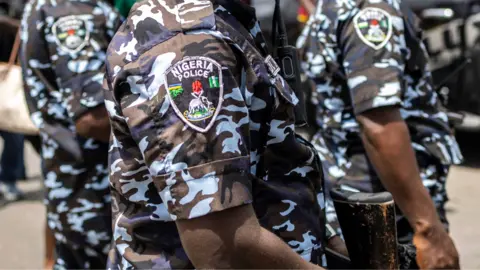
Sunday's presidential election comes about four months after outgoing President Patrice Talon survived a coup attempt, when Nigeria - the regional superpower - sent warplanes to bombard mutinous soldiers who had attempted to overthrow him.
Nigeria's intervention prevented Benin from going down the path of several other regional states - including Niger, Burkina Faso, and Mali - where the military seized power in recent years due to the failure of civilian governments to combat militants allied with al-Qaeda or the Islamic State (IS).
The threat posed by the insurgents was highlighted by the recent attack where an al-Qaeda affiliate killed 15 soldiers at a military base near the border with Niger. Last year alone, 28 soldiers were killed in an attack in the W National Park, and another 54 three months later.
The W National Park and two adjacent ones, Pendjari and Arly, comprise the largest protected areas in West Africa, where dense forests and porous borders make it easy for militants to establish bases and operate undetected. The violence has startled locals, who fear for their safety.
Candidates for the presidency, including Finance Minister Romuald Wadagni and his rival Paul Hounkpè, are facing the challenge of restoring security while navigating a changing political landscape. Many voters express a desire for a leader who can address the rising insurgent threat and improve relations with neighboring countries where instability is growing.
As the election approaches, regions remain tense, but the hope of a smooth transfer of power endures as voters look for solutions to a problem that threatens their country’s future.
Sunday's presidential election comes about four months after outgoing President Patrice Talon survived a coup attempt, when Nigeria - the regional superpower - sent warplanes to bombard mutinous soldiers who had attempted to overthrow him.
Nigeria's intervention prevented Benin from going down the path of several other regional states - including Niger, Burkina Faso, and Mali - where the military seized power in recent years due to the failure of civilian governments to combat militants allied with al-Qaeda or the Islamic State (IS).
The threat posed by the insurgents was highlighted by the recent attack where an al-Qaeda affiliate killed 15 soldiers at a military base near the border with Niger. Last year alone, 28 soldiers were killed in an attack in the W National Park, and another 54 three months later.
The W National Park and two adjacent ones, Pendjari and Arly, comprise the largest protected areas in West Africa, where dense forests and porous borders make it easy for militants to establish bases and operate undetected. The violence has startled locals, who fear for their safety.
Candidates for the presidency, including Finance Minister Romuald Wadagni and his rival Paul Hounkpè, are facing the challenge of restoring security while navigating a changing political landscape. Many voters express a desire for a leader who can address the rising insurgent threat and improve relations with neighboring countries where instability is growing.
As the election approaches, regions remain tense, but the hope of a smooth transfer of power endures as voters look for solutions to a problem that threatens their country’s future.