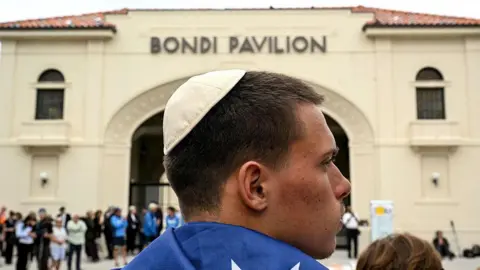
Bondi Beach is almost unrecognisable. The sun is out but the surf is empty. The usually heaving main street is hushed.
Helicopters track overhead. Forensic investigators in bright blue gear comb over the crime scene from Sunday afternoon when two gunmen opened fire at an event marking the Jewish festival of Hanukkah, killing at least 15 people and injuring over 40 others.
Beach chairs, crumpled towels, and a pair of children's sandals lie abandoned at the edge of the sand as people fled from what police are calling Australia's deadliest terror attack. Nearby, a growing wall of floral tributes indicates the shock and sorrow gripping the community.
I've grown up in fear my whole life, 22-year-old Jess tells the BBC. As a Jew, she feels the attack was inevitable.
Yvonne Harber, mourning at Bondi, comments, Our innocence is over... I think we will be forever changed, a bit like Port Arthur, referencing Australia's worst massacre in 1996 that led to sweeping gun reform.
Prominent community representatives express disbelief while recounting the painful realities that faced the victims—many of whom were there simply to celebrate. Among the deceased was Rabbi Eli Schlanger, who celebrated the birth of his fifth child just a month prior.
The youngest victim was a ten-year-old girl named Matilda, with reports indicating her age and identity were tragically tied to the Jewish identity that the attackers targeted.
Community leaders have long warned of rising antisemitism, especially following violent events overseas. The responses from local authorities have sparked a clamor for better protection measures and preventive strategies against hate crimes. Prime Minister Anthony Albanese condemned the act as an act of pure evil, but questions loom about whether the increase in hate incidents was adequately addressed beforehand.
In the aftermath, hundreds lined up for hours to donate blood for the wounded, showcasing the solidarity within the community amidst sorrow. Activists stress that the Australian Jewish community needs more than sympathy—it requires a reassessment of safety and a firm stand against all forms of discrimination.