In brief
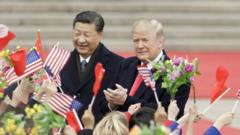
During a discussion with the Wall Street Journal’s editorial board, Trump conveyed that he would impose heavy tariffs on China if it attempted to blockade Taiwan, citing his rapport with Xi Jinping. The former president emphasized a "strong" relationship with Xi and portrayed his foreign policy as one of deterrence rather than aggression. Trump's campaign positions include mass deportations and criticism of perceived domestic threats, further defining his controversial approach to governance.
Trump's statements centered around his belief that the fear of his unpredictability would deter foreign adversaries, while also addressing issues of immigration and domestic security leading into the upcoming election.In his characteristic style, Trump underscored that if he secures another term as president, China would not provoke him because Xi Jinping recognizes he is "crazy." In remarks made to the Wall Street Journal, Trump discussed the potential for tariffs against China should it impose a blockade on Taiwan, suggesting that he would levy taxes ranging from 150% to 200% as a penalty."He [Xi] respects me and he knows I’m [expletive] crazy," Trump explained, maintaining that his previous administration successfully cultivated strong ties with Xi. The former president went on to articulate a similar sentiment regarding Russian President Vladimir Putin, claiming he conveyed a threat to Putin against further invasion of Ukraine.Trump's "America First" foreign policy prioritizes trade wars while critics label it isolationist. His recent selection of Senator JD Vance as a running mate has raised concerns among allies in Ukraine regarding continued U.S. support for the country amidst the ongoing conflict.Shifting focus to immigration issues, Trump reiterated his hardline stance, including plans for mass deportations of illegal immigrants. He stood by the family-separation policy enacted during his presidency, arguing it serves as a deterrent for illegal crossings.As for domestic threats, Trump indicated that he perceives the "radical left" as a bigger problem than foreign entities, emphasizing a commitment to addressing potential unrest surrounding the upcoming elections. When probed about possible military responses to internal dissent, he noted the potential necessity of deploying the National Guard in the case of riots.Trump's remarks encapsulated his controversial approach to governance as he prepares for the election, highlighting key issues he believes will resonate with his base, including foreign relations, immigration, and national security.