
In brief
Air quality in India's capital has plummeted to alarming levels, with pollution readings far exceeding the World Health Organization's guidelines. Experts attribute the sharp decline to weather conditions, Diwali celebrations, and agricultural practices in nearby regions. The surge in particulate matter (PM 2.5) poses significant health risks, prompting local authorities to enforce emergency measures and urge residents to remain indoors.
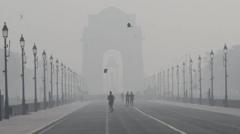
In the last week, Delhi has witnessed pollution levels categorized as "very poor" and "severe," with measurements reaching an astonishing 25 to 30 times the safe limits established by the World Health Organization. As festivities approach, experts anticipate worsened air quality driven by weather patterns, increased firecracker use for Diwali, and agricultural stubble burning in adjacent states.On Monday, PM 2.5 particulate matter levels peaked at 350 micrograms per cubic meter in specific parts of the city, according to data from the government-operated Safar website. The air quality index tags pollution as very poor between 300 to 400 micrograms and severe between 400 to 500 micrograms, indicating a public health crisis.Each winter, Delhi experiences a dense fog of smog, primarily attributed to dust, smoke, low wind speeds, vehicular emissions, and the burning of crop stubble by farmers in Punjab and Haryana in November and December. Local agricultural groups emphasize the need for better financial and technical support to adopt alternative methods for dealing with crop remains, but government initiatives have lessened effectiveness.The upcoming Diwali festival, traditionally marked by firecrackers, only compounds the issue. Despite the Delhi government's strict bans on production, storage, and sale of fireworks, enforcement has proved challenging as residents often procure them from neighboring states.In response to the critical situation, authorities have activated the Graded Response Action Plan (GRAP), which limits coal and firewood usage and prohibits diesel generator operation for non-emergency purposes. Officials have also strongly advised the public to limit outdoor activities, restrict construction work, and use public transportation to decrease vehicle emissions.With air quality deteriorating rapidly, residents face significant health risks, raising urgent calls for effective pollution control measures as celebrations coincide with an environmental emergency.

