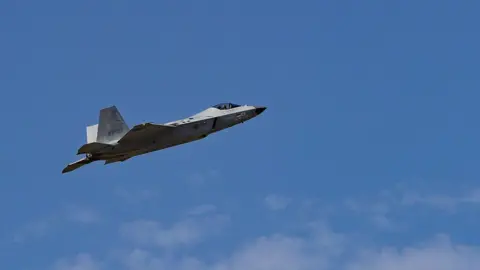
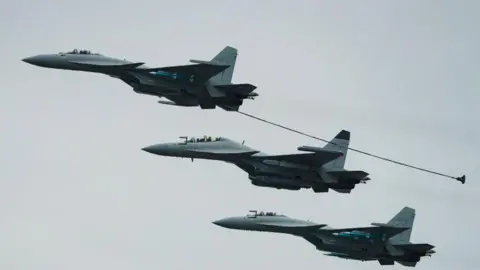
Japanese defense officials reported a dangerous incident in which a Chinese J-15 fighter jet flew perilously close to a Japanese P-3C patrol aircraft over international waters in the Pacific Ocean last weekend. According to the Defense Ministry's statement, the Chinese jet came within 150 feet of the Japanese plane on Saturday and then passed in front at a distance of only 3,000 feet on Sunday, heightening fears of a potential crash. This event occurred amidst a significant military exercise by China, involving its Shandong aircraft carrier, marking the first time two carriers operated so far from the Chinese coast, which is seen as a demonstration of Beijing's expanding military capabilities.
In response, Japan's Defense Minister, Gen Nakatani, voiced serious concerns during a security meeting at the Diet, urging China to prevent similar incidents in the future to avoid accidental collisions. Gen. Yoshihide Yoshida, the chief of Japan’s joint staff, echoed these sentiments, highlighting the risk posed by the Chinese jet, which appeared to be armed with missiles. He expressed unease about the increasing prevalence of such confrontational maneuvers by China, noting they have been occurring in an intermittent yet persistent manner.
The Chinese Foreign Ministry sought to downplay the incident, stating that both nations’ defense ministries were in communication over the situation, yet they implied Japan was to blame for the encounter. Spokesman Lin Jian remarked that "the close maneuvers of the Japanese airplanes against China is the fundamental reason for such a situation," calling for Japan to adopt a more objective perspective on the events.
Historically, tensions in the region have shown volatility, with past incidents such as the 2001 collision between a U.S. Navy surveillance plane and a Chinese fighter jet resulting in the death of the Chinese pilot after an emergency landing in China. As China continues to assert its military presence in the Pacific, the risk of dangerous encounters escalates, drawing concerns from its neighbors and international stakeholders alike.