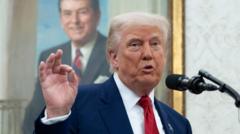
The Manhattan-based court found that the International Emergency Economic Powers Act (IEEPA), a legislative measure from 1977, does not confer the authority needed for the sweeping tariffs criticized by a broad coalition of economic stakeholders. This ruling blocked not only Trump's "Liberation Day" tariffs but also further duties directed at China, Mexico, and Canada, which had been set in response to drug and immigration concerns.
The case was prompted by a lawsuit instigated by the Liberty Justice Center on behalf of five small businesses adversely affected by these import duties. The decision has sparked immediate reactions, with the Trump administration filing an appeal shortly after the ruling was announced. The White House expressed frustration with the judicial outcome while affirming its intention to use all available executive powers to safeguard American interests.
Public figures like New York's Attorney General Letitia James commended the court’s decision, underlining the inappropriateness of a president exercising expansive powers to levy taxes that could disproportionately affect American households and entrepreneurs. James warned that the tariffs could exacerbate inflation and economic strain.
The judicial outcome triggered positive ripples in global markets; stock exchanges in Asia surged with US stock futures following suit, as investor relief emerged from weeks of trade-related uncertainties. Stephen Innes, an analyst at SPI Asset Management, emphasized that the ruling not only signified a constitutional check on executive power but also heralded a restored sense of stability within economic narratives.
With the White House given a 10-day window to navigate procedural measures aimed at halting the tariffs, further developments hinge on the appeal's outcome. If upheld, businesses subjected to the tariffs could expect refunds for previously paid amounts, potentially catalyzing a resurgence in trade fluidity, though no immediate changes will occur at border entry points.
This legal debacle traces back to early April when Trump unveiled a comprehensive tariff policy that targeted a wide array of trade partners. As trade negotiations fluctuated, the landscape became increasingly chaotic, intensifying the ongoing strife with China marked by cyclical tariff increases. However, a truce had been reached, reducing the previously soaring rates between the US and China.
As the dust settles from this monumental ruling, questions remain regarding its long-term impacts on US economic policy and international trade relations, setting the stage for an evolving narrative in future economic engagements.
The case was prompted by a lawsuit instigated by the Liberty Justice Center on behalf of five small businesses adversely affected by these import duties. The decision has sparked immediate reactions, with the Trump administration filing an appeal shortly after the ruling was announced. The White House expressed frustration with the judicial outcome while affirming its intention to use all available executive powers to safeguard American interests.
Public figures like New York's Attorney General Letitia James commended the court’s decision, underlining the inappropriateness of a president exercising expansive powers to levy taxes that could disproportionately affect American households and entrepreneurs. James warned that the tariffs could exacerbate inflation and economic strain.
The judicial outcome triggered positive ripples in global markets; stock exchanges in Asia surged with US stock futures following suit, as investor relief emerged from weeks of trade-related uncertainties. Stephen Innes, an analyst at SPI Asset Management, emphasized that the ruling not only signified a constitutional check on executive power but also heralded a restored sense of stability within economic narratives.
With the White House given a 10-day window to navigate procedural measures aimed at halting the tariffs, further developments hinge on the appeal's outcome. If upheld, businesses subjected to the tariffs could expect refunds for previously paid amounts, potentially catalyzing a resurgence in trade fluidity, though no immediate changes will occur at border entry points.
This legal debacle traces back to early April when Trump unveiled a comprehensive tariff policy that targeted a wide array of trade partners. As trade negotiations fluctuated, the landscape became increasingly chaotic, intensifying the ongoing strife with China marked by cyclical tariff increases. However, a truce had been reached, reducing the previously soaring rates between the US and China.
As the dust settles from this monumental ruling, questions remain regarding its long-term impacts on US economic policy and international trade relations, setting the stage for an evolving narrative in future economic engagements.