
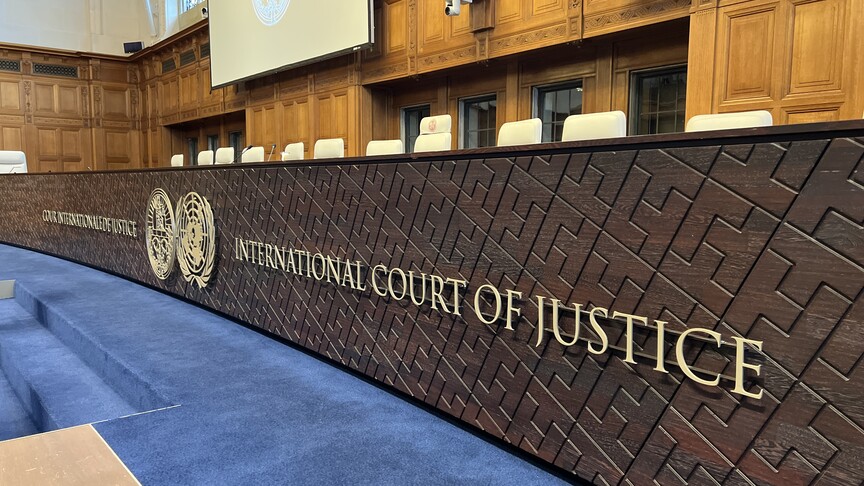
On Tuesday the UN General Assembly and the Security Council voted to fill five new seats on the International Court of Justice, a judicial branch of the United Nations that sits in The Hague, Netherlands. The elected judges—Dapo Akande of the United Kingdom, Francois Alabrune of France, Mahmoud Daifallah Hmoud of Jordan, Rena Lee of Singapore, and Phoebe Okowa of Kenya—will assume their nine‑year terms on February 6, 2027, replacing the outgoing members whose mandates end the day before.
UN law requires a candidate to receive an absolute majority of votes in both the General Assembly and the Security Council. The first four judges met that threshold in the initial round of voting, and their seats were secured in a single session for the Assembly and the Council. Their elections were announced at a joint press briefing that confirmed the winners’ readiness to take office on February 6, 2027.
The fifth seat triggered a multiround contest because the two organs could not agree on a single candidate. In the first sub‑session, Ecuadorian delegate Marcelo Vazquez‑Bermudez achieved the necessary majority in the Security Council but fell short in the General Assembly. He subsequently withdrew from the race, creating a vacancy that required additional voting. Over the following weeks, the General Assembly and the Council held iterative ballots; eventually, the Kenyan lawyer Phoebe Okowa secured the support of both bodies, allowing her to be elected in the final round. The new judges will take office as current members complete their terms on February 5, 2027.
Election Process Detail
The procedural framework sets that a single candidate must obtain a majority in the General Assembly—an average of 115 votes when all 193 member states are present—and an identical majority in the Security Council, whose 15 members vote by secret ballot. Failure to achieve these majorities concurrently forces a further sequence of combined votes. In this instance, a third round of deliberation was necessary after the initial withdrawal of a candidate with partial support. The final ballot was conducted in the combined chambers to confirm Okowa’s position.
Internationally, the Court of Justice serves as the primary adjudicative body for disputes between states and for issuing advisory opinions to authorized UN organs and agencies. The newly elected judges will thus participate in decisions ranging from territorial disagreements to human rights complaints and will influence the interpretation of international law for the next nine years.
The press release quoted a senior UN official: “The new appointments have been conducted with the utmost attention to the court’s longstanding tradition of independence and impartiality.” The official emphasized that the unanimous consensus—or near consensus—between the General Assembly and Security Council was a testament to the continuing respect for the Court’s jurisdiction worldwide.
For the present, the statutory procedures have been completed, the seats filled, and the judges scheduled to begin their terms. The five incumbents whose terms expire on February 5, 2027, will vacate their posts and make way for their successors.
The source does not specify any unresolved issues regarding the election or the future roles of the new judges.
