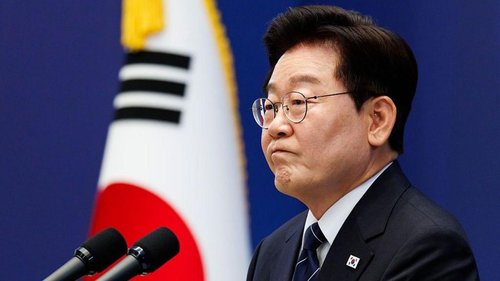
On 31 October 2026, President Lee Jae Myung travelled unannounced to North Gyeongsang Province to inspect a pilot basic‑income scheme that provides 150,000 won each month in gift vouchers to residents of several depopulated rural towns.
Background of the Basic Income Pilot
Under the pilot, households in selected villages receive monthly vouchers worth 150,000 won, intended to supplement incomes and stimulate local consumption. The program targets counties that have been officially designated as population‑declining and is administered under a national strategy to counter rural depopulation.
Current Status and Nationwide Context
A total of 69 counties nationwide have been named as population‑declining regions. Seventeen of these counties—among them several in North Gyeongsang—are presently running the pilot, allowing the government to trial different approaches and measure local outcomes before any potential nationwide roll‑out.
Lee’s visit to the province was unannounced, a fact highlighted in a brief social media post by the president in which he extended greetings to residents in Yeongyang and Cheongsong counties, the two departments within North Gyeongsang where the pilot is active.
The president used the occasion to emphasize the administration’s commitment to regional revitalisation, citing the basic‑income pilot as an example of concrete action aimed at revitalising rural areas and reducing the gap between urban and rural economies.
There is speculation among observers that the pilot will serve as a testing ground for a broader national policy that could provide regular, unconditional basic income to residents in the most severely declined communities. The exact scope and timeline for any future expansion remain unspecified.
While the program’s modest monthly voucher of 150,000 won is designed to offer tangible relief, critics have pointed out that the amount may be insufficient to cover significant costs in rural settings, raising questions about the program’s long‑term viability and its ability to spur sustained economic activity.
The pilot’s progress will be monitored through various performance indicators, though the measure of success and the criteria for scaling up have not been formally disclosed by government officials. Consequently, the effectiveness of the voucher system, its impact on rural livelihoods, and whether it will ultimately evolve into a permanent component of national social policy remain unresolved.