
In brief
The ongoing conflict in the occupied West Bank has led to dangerous conditions for Palestinian olive farmers, culminating in fatal incidents and resource deprivation, leaving families fearing for their traditional livelihoods.
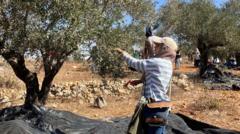
The olive harvest in the occupied West Bank, a vital agricultural ritual for many Palestinian families, is becoming increasingly perilous due to violent clashes with Israeli soldiers and settlers. Hanan Abu Salameh, a 59-year-old mother of seven, was tragically shot and killed by an Israeli soldier while gathering olives on her family’s land near Faqqua. Despite coordinating their harvest plans with the Israeli Defense Forces (IDF), her family was met with gunfire, leaving them without hope for justice as the IDF investigates the incident.This incident is part of a broader pattern of violence affecting olive farmers in the region. Many report being unable to harvest their crops as Israeli settlers launch coordinated attacks to disrupt their efforts. Omar Tanatara, a farmer from Umm Safa, expressed the dire situation, recalling last year when they were ordered by the army to leave their olive grove after their harvest was scattered on the ground. Furthermore, many trees have been brutally cut down or set ablaze, with the UN stating that over 96,000 dunums of olive groves went uncultivated this year due to access restrictions.Despite efforts by Israeli and international activists to support Palestinian farmers, safety is not guaranteed. Activist Zuraya Hadad suffered injuries during a recent incident while trying to aid farmers. Frustrated, she relayed the futility of their presence amidst ongoing violence, as settlers either stole olives or destroyed crops. The olive tree, integral to the Palestinian economy, symbolizes their deep-rooted connection to the land. Yet, with attacks on farmers escalating and vital economic resources dwindling, many express grave concerns for their traditions and livelihoods.The economic implications are significant; olive cultivation generates over $70 million annually for the Palestinian economy during a good harvest season. However, following violent encounters and declining access to their fields, farmers are left to grapple with potential losses. Factory owner Abd al-Rahman Khalifa observed that the reduction in farmers able to harvest contributes to the dire economic outlook for the coming year.Contributing to the aggression are extremist Israeli settlers and ministerial support from far-right officials such as Itamar Ben-Gvir, who actively encourages settlers to assert control over what they claim to be their land. This environment fosters hostility during harvesting seasons, as illegal settlements pose an ever-present threat to Palestinian agriculture.As farmers navigate the challenges of transforming their limited harvest into much-needed olive oil, the age-old ritual of olive cultivation stands at a crossroads. The olive tree remains a powerful symbol of Palestinian identity and resilience, but the ongoing threat to this essential aspect of their culture and livelihood looms greater than ever.

