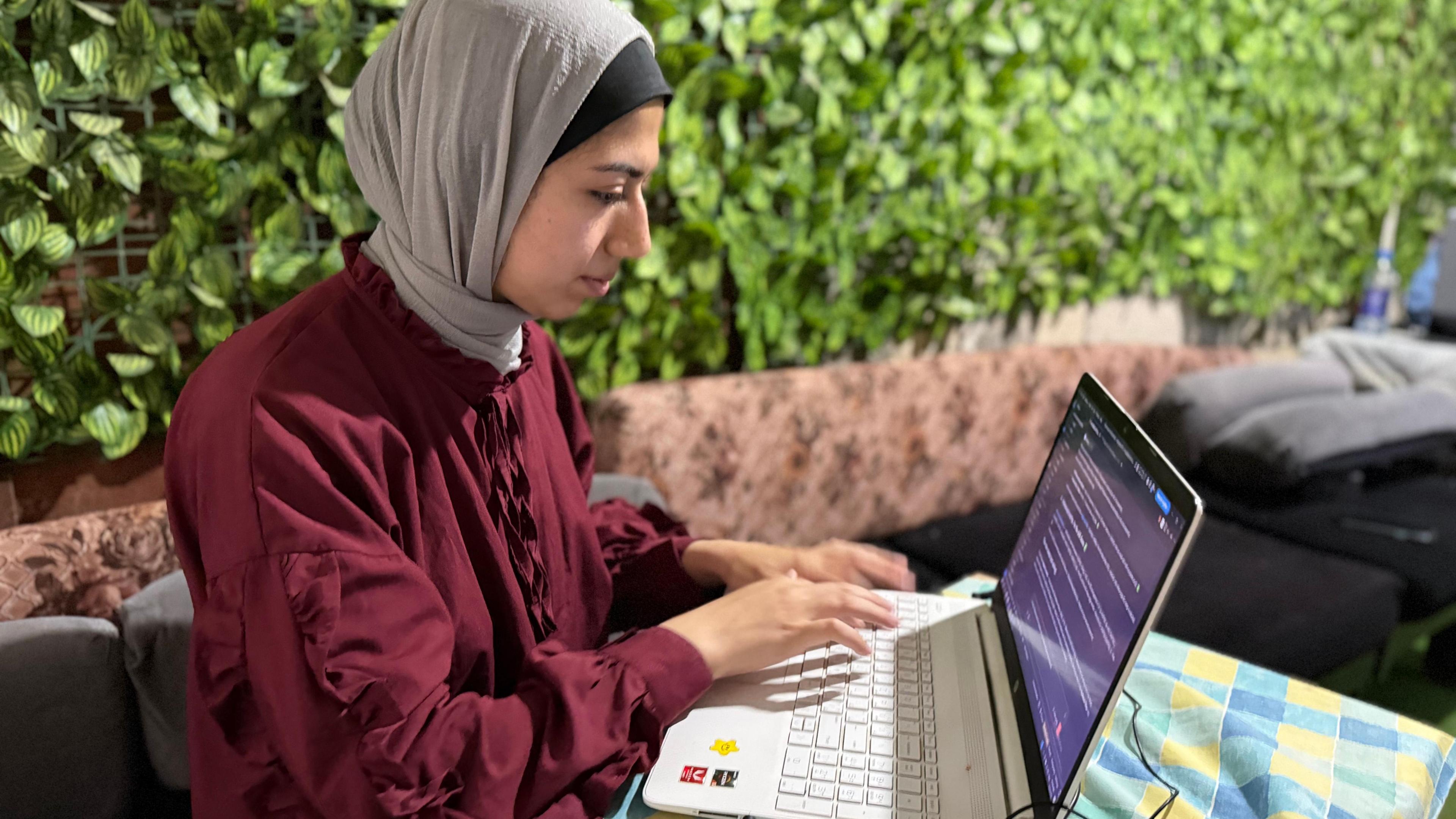
In the heart of Gaza’s ash‑swept cities, a quiet revolution is underway. 24‑year‑old Walaa Volidis, a Palestinian software engineer, is one of thousands who have turned their laptops into lifelines, fighting to keep their careers afloat while living in a tent and supporting her displaced parents and four younger siblings.
“It was a trough of uncertainty,” Walaa says. “The decision was to keep fighting for my dreams,” she adds.
She now greets clients in California via video call, toggling between AI and coding to keep her skill set sharp, even as the loss of her job and university left her mental health in tatters. Yet “digital lifeline” has become a vital concept: Mahmstates work for Gaza’s tech community “to help people go back to work and not rely on aid.”
Tech hubs, established by Gaza Sky Geeks and supported by Mercy Corps, have been ravaged by the war. New co‑working spaces are powered by generators and solar panels, offering solar‑powered Wi‑Fi and power in a region where 75 percent of telecommunications networks have been destroyed. These makeshift workspaces give freelancers like 44‑year‑old Tarik Zaeem, former CTO, a chance to build clix apps for foreign clients, though payment systems remain fraught; most money must still travel through prohibitively expensive brokers in Egypt.
Despite ongoing airstrikes—Israel claims to target Hamas operatives—Gaza’s software community continues to function. Mahran Bayed, who survives a damaged laptop and a damaged home, tells clients he will deliver “online, even if we are killed,” reassuring international partners that his work can still reach the end‑user.
The world’s attention on warfare sees little change in Gaza’s fuel and electricity supply. Yet, as Gaza’s power grid collapses, NGOs patch systems, repair hardware from damaged devices, and provide career coaching to young engineers. Their stories give a glimpse of a brighter possible future, with a technology sector that may help rebuild the territory’s self‑reliance and economy, even in the aftermath of conflict.