
In brief
In a nation teetering on the brink, the struggle for Georgia's political destiny unfolds as protests demand adherence to European values over Russian alignment.
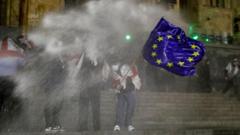
Night after night, thousands of Georgians converge on Rustaveli Avenue in Tbilisi, filling the streets as they wave banners emblazoned with the blue and gold of the EU and other symbols of democratic engagement. Accusations fly toward the ruling party, Georgian Dream, which faces fierce public outcry over allegations that it is steering the country back into Russia's orbit. Tensions continue to mount as recent government actions prompt significant fallout with both the EU and the United States, culminating in the suspension of a vital strategic partnership.Demonstrators filled the street encircling parliament, armed with whistles, vuvuzelas, and smaller fireworks, occasionally directed at police forces standing ready with water cannons and tear gas. The atmosphere has grown increasingly fraught, with reports indicating over 100 police have sustained injuries while numerous protesters faced violence during detainment by authorities. The chilling accounts shared by human rights lawyers highlight a situation increasingly marked by brutality and excessive force on the part of law enforcement.Opposition leaders, led by figures like Nika Gvaramia, are vocal about their fight against what they perceive as a creeping authoritarianism. They echo sentiments that Georgia faces a pivotal choice: either embrace a vibrant European future or succumb to Russian dominance—a dichotomy that triggers dire comparisons to Ukraine's past struggles against similar forces. As protests persist, prominent public voices emphasize the need for transparency in elections, fiercely insisting on a fresh electoral process under international oversight to combat the widespread skepticism regarding the last vote marred by allegations of corruption.Despite the challenges, the spirit of resistance remains unyielding, with reports of similar demonstrations spreading to cities beyond Tbilisi. The protests capture a nation’s demand for dignity and democratic principles, as support for President Salome Zourabichvili continues to galvanize the opposition movement, pushing back against the claims of legitimacy made by Georgian Dream. Meanwhile, the prime minister's refusal to engage in talks signals a potential stalemate with no clear resolution in sight.With temperatures plunging and the political future uncertain, many Georgians remain committed to their nightly calls for change, embodying a commitment to stand firm against the influence of their historical rival, while simultaneously resisting the pressures of their current government. The world watches closely as Georgia's battle to define its future unfolds at the heart of Tbilisi.
