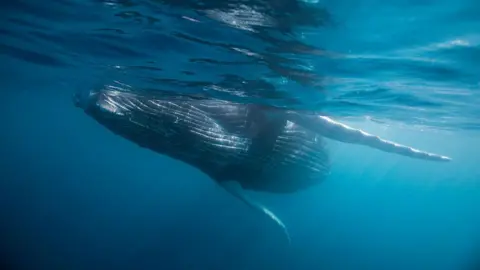
Whale Graveyard Dating Back Five Million Years Discovered
Scientists have uncovered a colossal, 1,200‑km long, 7‑km deep decomposed whale cemetery in the Diamantina fracture zone of the southeastern Indian Ocean, pushing back the fossil record of cetacean carcasses to about 5.3 million years ago.
The site yielded 485 fossilised bodies, one well‑preserved skeleton of the extinct Pterocetus benguelae, and a newly named species, Pterocetus diamantinae, after the discovery location.
Beyond the fossils, a thriving ecosystem of scavengers—including jellyfish, worms and crustaceans—now dominates the submarine landscape, suggesting rapid colonisation after giant carcasses sank.
Lead researcher Xiaotong Peng remarked that the range, depth and age of the necropolis were "far beyond anything imagined." The find, detailed in the journal Nature, promises to inspire future deep‑sea expeditions into similar unexplored trenches.