
In brief
The U.S. struck the Iranian‑linked oil tanker Belma with Hellfire missiles, an action tied to the reimposition of a blockade on Iranian ports by President Trump. The attack followed a series of Iranian strikes on commercial vessels and the lifting and subsequent re‑application of sanctions. Over the previous two months the U.S. had redirected more than 140 ships, disabled nine vessels, and removed a temporary license allowing Iranian oil sales. Experts estimate that between the blockade’s end and its restart Iran exported at least 74 million barrels worth of oil, roughly $6 billion. The incident underscores the fragile nature of Gulf maritime security and the rapid escalation of U.S.‑Iranian tensions.
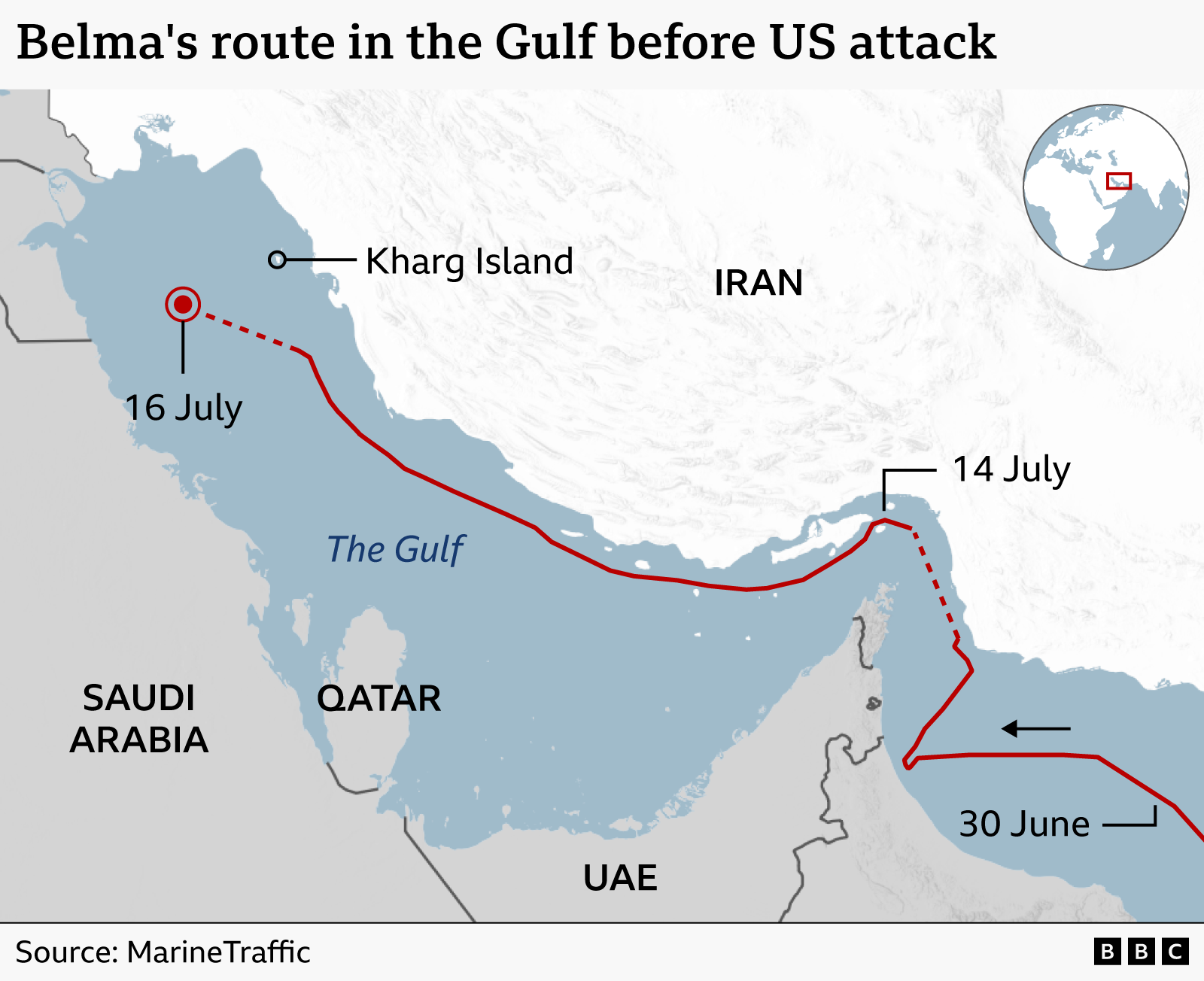
The United States fired Hellfire missiles at the oil tanker Belma in the Gulf of Oman, striking the vessel’s smokestack as it moved toward Iran’s Kharg Island terminal. The attack was part of a renewed blockade re‑implemented by President Donald Trump following a series of Iranian attacks on commercial ships in the Strait of Hormuz.
U.S. Central Command reported that the tanker had ignored several warning messages, prompting a missile strike en‑route. The U.S. also redirected two other commercial vessels that complied with its orders to alter course.
Between 13 April and 18 June, the U.S. naval blockade disabled nine ships and redirected more than 140 vessels. The blockade and key sanctions on Iranian oil were lifted after a ceasefire agreement on 17 June, but were quickly reinstated after Iran conducted a series of maritime attacks.
Analysis shows that Iran exported at least 74 million barrels of oil—estimated at more than $6 billion—between the ceasefire period and the blockade’s resumption. The U.S. temporarily lifted a license that allowed Iranian oil sales, only to revoke it again following renewed hostilities.
The incident underscores the volatility of shipping in the Gulf and the rapid military escalation that can arise from diplomatic actions. Friction remains high, and international shipping continues to face escalating risks of interruption and damage.
