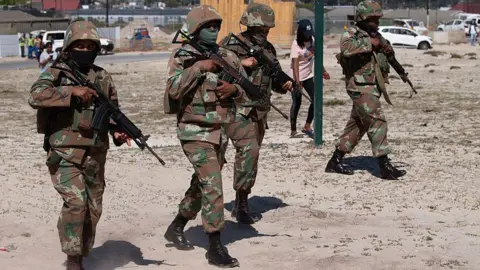
In a significant move to combat the surging rates of violent crime, particularly related to gang activity and illicit mining, South Africa's army has commenced deployment in several crime-stricken areas across the nation. Announced by President Cyril Ramaphosa, this initiative involves the mobilization of 2,200 troops to the provinces most affected by crime, including Gauteng, Eastern Cape, Free State, North West, and Western Cape.
The deployment will last for a year, with aims to restore order in regions troubled by gang violence and illegal mining practices. However, the effectiveness of using military personnel for policing has come under scrutiny, as experts argue that military training focuses on combat rather than community engagement. Security professionals have raised alarms that this approach may escalate violence rather than reduce it.
Recent crime statistics indicate a troubling trend, with approximately 71 murders recorded daily. As the initial group of soldiers began operations in Gauteng, residents in the communities expressed mixed feelings about the army presence, with some asserting that military interventions often provide only temporary relief.
Skepticism persists among locals; elderly residents describe their neighborhoods as 'hell-holes,' indicating deep concern over safety. While some believe that the army's presence contributes to a safer environment, others argue that without a long-term strategy addressing the root causes of crime, any decrease in violence will likely be temporary.
This isn't the first military deployment requested by the South African government; in the past, troops were sent in response to various crises, including riots and public disorder. Yet, as the nation grapples with the highest murder rates globally, many community members and experts demand a comprehensive plan focused on reducing the underlying issues that fuel crime.