
In brief
Following the Knesset's vote to ban UNRWA from operating in Israel and East Jerusalem, concerns mount over the fate of humanitarian aid in Gaza and the West Bank as UNRWA warns of potential devastation to aid chains.
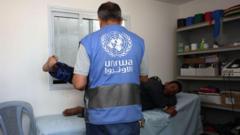
Israel's parliament, the Knesset, has voted to prohibit the United Nations Relief and Works Agency for Palestine Refugees (UNRWA) from conducting operations within Israel and occupied East Jerusalem. This ban, which restricts any contact between UNRWA employees and Israeli officials, threatens to significantly impair the agency’s ability to function in Gaza and the West Bank, areas where the vast majority of residents rely on its aid services. The new law has triggered widespread criticism, with UNRWA cautioning that it could lead to a collapse of supply chains in the ensuing weeks.Israel has defended its decision by reiterating accusations that certain UNRWA staff members were linked to the Hamas attacks on October 7, 2022, which resulted in the deaths of over 1,200 individuals. The tension between Israel and UNRWA extends back decades, centering on the agency's role and the issue of Palestinian refugees, many of whom aspire to return to their ancestral homes within the borders of today's Israel.Established in 1949, UNRWA was designed to assist the Palestinian population displaced during the founding of Israel, initially aiding 700,000 refugees and now providing services to millions across Gaza, the West Bank, Syria, Lebanon, and Jordan. Employing approximately 13,000 personnel in Gaza, the agency plays an integral part in delivering humanitarian support, distributing food parcels to nearly 1.9 million individuals and offering medical consultations almost six million times amid ongoing conflicts.Historically, Israel has opposed UNRWA's very existence, claiming its operations perpetuate the refugee status of Palestinians across generations and encourage their aspirations of return. The agency has also faced scrutiny for its educational materials, with Israeli officials alleging that these propagate negative views of Israel. Recent investigations have brought to light claims that over 450 UNRWA employees had affiliations with terrorist groups, prompting funding suspensions from numerous Western nations.The ramifications of the Knesset's ban could be dire, particularly for Gaza, where UNRWA acts as a crucial conduit for humanitarian aid. With the new law effectively preventing UNRWA from liaising with Israeli authorities, operational challenges are anticipated, significantly complicating the distribution of vital resources. UNRWA's director, William Deere, emphasized that this ban would render it "almost impossible" to coordinate essential activities in the region, potentially leaving millions without access to necessary food and medical care.In response to the crisis affecting humanitarian efforts, Israeli Prime Minister Benjamin Netanyahu asserted that humanitarian aid to Gaza would continue despite the ban. However, the international community, including the U.S. State Department, urged Israel to facilitate the entry of aid into Gaza, highlighting that more must be done to address the escalating humanitarian needs of the affected population.
