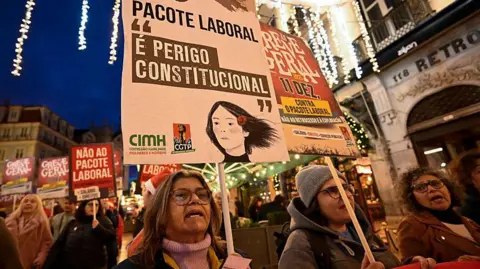
Dozens of flights and trains have been cancelled, schools closed, and hospital operations postponed across Portugal as the two main union federations orchestrate a general strike over unprecedented labor reforms.
Public transport was reduced to a minimum service in many regions, with unions reporting refuse collections were halted as the strike commenced.
The last collaboration between the CGTP and the generally less militant UGT happened during the eurozone debt crisis in 2013, when strict austerity measures were imposed on Portugal.
Twelve years later, although Portugal's economy has emerged as the fastest growing in the eurozone, Prime Minister Luís Montenegro insists reforms are necessary to address labor market 'rigidities' to boost profitability and improve wages.
I will not give up on having a country with the ambition to be at the forefront, to be at the vanguard of Europe, Montenegro stated just before the strike.
However, the magnitude of the opposition to his minority right-of-centre government's proposals has taken Montenegro by surprise. Even members from his ruling Social Democratic Party, including one on the UGT executive, supported the strike.
While Montenegro attempted to amend several proposals following talks with union leaders, the efforts fell short. The controversial reforms include provisions allowing employers to indefinitely extend temporary contracts and remove protections against unfair dismissals.
Younger workers are likely to feel the most significant impact from these changes, leading to mixed sentiments on the reforms. Some express support for the need for competitive labor measures, while others lament the lack of stable employment opportunities.
Montenegro’s coalition faces scrutiny over its labor reforms, with increasing calls for a re-evaluation of the changes during the upcoming presidential election. The UGT and CGTP have united to condemn the proposals as harmful to workers' rights, especially affecting vulnerable demographics.
The current political environment suggests an uphill struggle for Montenegro's reforms, with unions warning of a challenging future if workers' rights are compromised under the guise of economic progress.