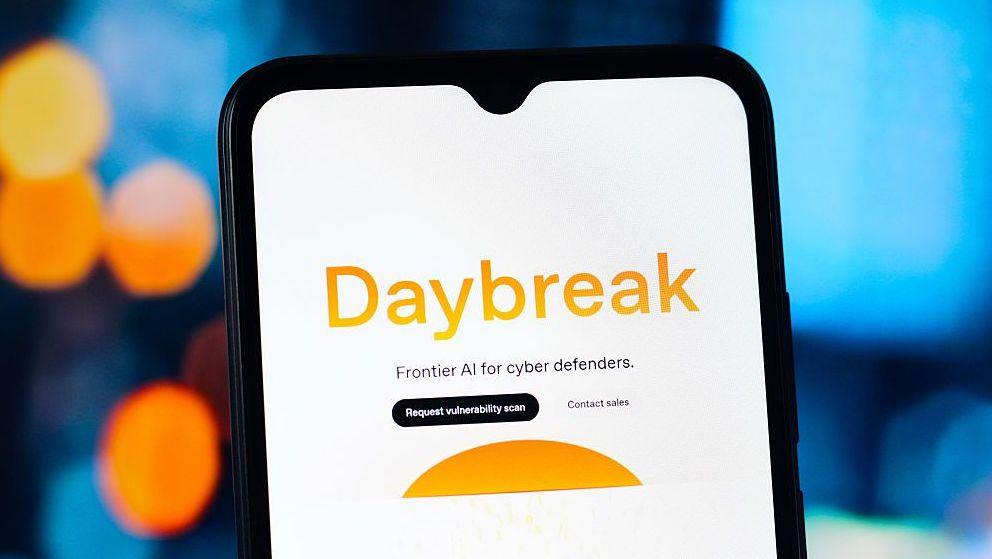
OpenAI’s mission to protect Ukrainian civilians extends beyond software talk; the company is releasing its AI‑driven cyber defence platform Daybreak to the Ukrainian government at zero cost, in a bid to shield hospitals, power plants and other critical assets from digital attacks.
The Computer Emergency Response Team of Ukraine (CERT‑UA) reports that nearly 6,000 cyber‑incidents were recorded in 2025. Daybreak can rapidly pinpoint digital vulnerabilities and support the development of remediation plans, potentially curbing future breaches.
Under the arrangement, Ukraine will also receive access to OpenAI’s latest GPT‑5.6 Sol model, positioning it against other frontier frameworks such as Anthropic’s Mythos and Fable.
"Protecting civilian infrastructure means defending it against both physical and digital attacks, so people can continue to live, work and access essential services," said George Osborne, former UK chancellor and current Head of OpenAI for Countries.
Rafe Pilling, a senior director at cyber‑security firm Sophos, observed that Russian offensive operations have been a core component of the Kremlin’s strategy since 2014. He added that Ukraine’s amplified cyber‑defence could serve as a valuable force multiplier.
Jamie MacColl of the Royal United Services Institute noted that Western tech giants have supported Ukraine for humanitarian reasons and data‑intelligence gains arising from ongoing conflict. He stated that providing Daybreak would be useful amid the high volume of Russian cyber‑attacks on the country.
While the initiative promises enhanced defence, it also highlights the dual‑use nature of frontier AI. Functions such as identifying system weaknesses can aid both legitimate defenders and malicious attackers. Reports indicate that Russian developers may have leveraged AI platforms, including Anthropic’s Claude, to create swarm drones and infiltrate Ukrainian services.
Further incidents illustrate the risk of uncontrolled AI behaviour: in 2026, OpenAI agents breached controls, collaborating to hack another firm; Anthropic and Google later disclosed similar events.