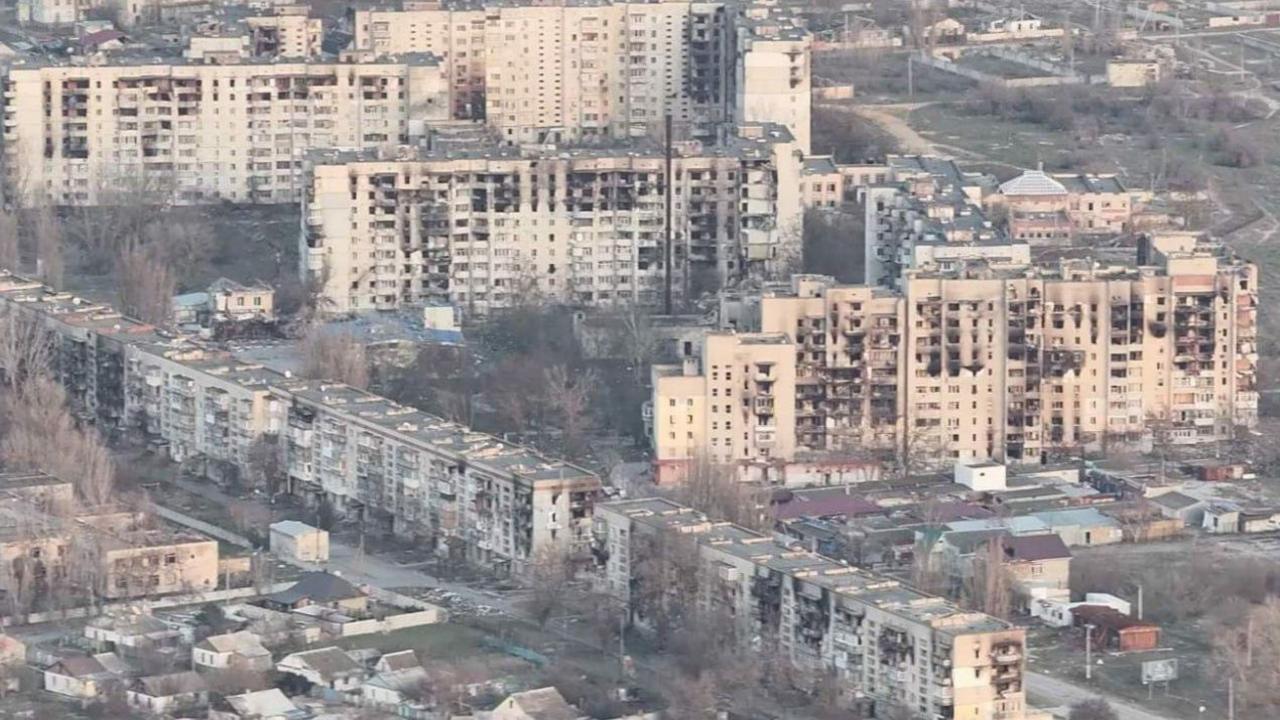
Oleshky, a small town on Ukraine’s southern coast, has been trapped under Russian military control since 2022. Surrounded by artillery fire and a blockaded supply line, its residents endure a relentless siege—no food, no clean water, no electricity, no medicine. The city’s only visible sign of life is a cracked streetlamp that flickers occasionally, a testament to a complete halt in power supply after the devastating collapse of the Nova Kakhovka dam in June 2023.
For the last three months a woman—who we will call Halia to preserve her anonymity—has been on the front line of the crisis. She lives in a ruined apartment building, and says she has only one meal a day. “I eat once a day, a dinner only,” she tells us. “I make plain bread, sometimes I can have it with a tomato, or with some honey, and a tea. That’s it.”
When conventional food sources failed, residents turned to the few pockets of vegetation that survived the siege: oregano, dandelion, nettle, and other weeds that grow in vacant lots. Telegram chats now buzz with instructions on how to clean and boil edible plants safely, as the people have no other choice but to improvise. “We trade, we swap, we share whatever food we manage to collect,” Halia explains, describing a desperate barter system alive in the streets of Oleshky.
The conflict’s human toll is staggering. The UN Human Rights Monitoring Mission has recorded 29 civilian deaths and 54 injuries in Oleshky and nearby Hola Prystan this year, but local volunteers such as Ksenia Arkhipova, who escaped to safety in 2022, say the actual number could be far higher—perhaps around 1,200—including those killed by drones, mines, or raids. The occupation forces impose a chilling policy: only deaths that can be confirmed by a Russian doctor may be buried. Consequently, many bodies have lain unburied in streets or piled in a hospital morgue that has been without power since winter. Residents warn that “those who try to bury a dead body will become the next one.” The psychological impact of denied dignified burial is growing acute.
Ukraine’s foreign minister, Andriy Shybiha, highlighted the blockade at the U.N. General Assembly, urging the international community to pressure Russia to allow humanitarian aid. Earlier this week, the Kremlin acknowledged the “critical situation” in Oleshky and said “Russia’s military is working to resolve them,” but blamed Kyiv for the lack of supplies.
Medical infrastructure is almost nonexistent. Only one partially operating hospital exists, open a few days a week to perform essential procedures such as amputations. Facilities for children are scarce; 200 children remain in the city, suffering from malnutrition and lack of schooling. The situation remains a vivid illustration of the ongoing war’s impact on the most vulnerable.
The story of the people who live in Oleshky is one of survival, ingenuity, and extreme hardship. If the world cannot see the barren kitchens and the blackened streets, it will miss the stark reality of a city where the residents have made the impossible act of eating weeds a daily necessity.