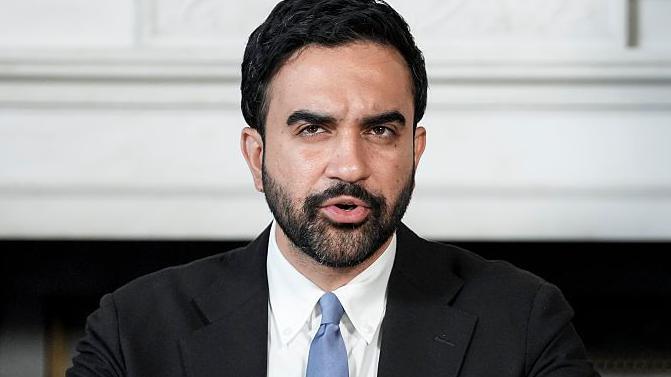
New York City Mayor Zohran Mamdani, who once pledged to arrest Israeli Prime Minister Benjamin Netanyahu during a city visit, has retracted that pledge, citing his lack of legal authority.
Mamdani recorded a video on social media in which he urged U.S. officials to act on the International Criminal Court’s (ICC) arrest warrant issued in 2024 for alleged war crimes in Gaza. The mayor noted that while any individual traveling to an ICC‑member state could theoretically be arrested, the United States is not a party to the Rome Statute and cannot enforce ICC warrants upon its own territory.
Former President Donald Trump publicly denied that Netanyahu would be arrested while in the U.S., stating that the Israeli leader is "fighting against the Islamic Republic of Iran…and has spent the last 47 years killing American Soldiers, and others.” That statement was posted on Truth Social following Mamdani’s New York Times interview, where the mayor claimed he had an "active conversation" with law‑enforcement to enforce the warrant.
On Tuesday the mayor declared that, after reviewing every legal avenue, “we do not have the independent legal authority to enforce this.” He added, "The federal government, however, does," and urged the federal government to join the ICC to execute the warrant.
He also warned Netanyahu that he is not welcome in New York City, where he is scheduled to attend the U.N. General Assembly in September.
Mamdani’s statements come amid a growing shift among American voters. A recent poll indicates that 58% of Democrats now believe the U.S. is too supportive of Israel, up from 45% in 2024.
In response to Mamdani’s remarks, Israeli Ambassador to the U.N., Danny Danon, told the mayor that he had been elected to serve New Yorkers, not to advance Hamas propaganda.
The mayor’s initial pledge, made during his campaign, had invoked ICC authority to treat Netanyahu as a war criminal, adding that a local arrest would honor the ICC’s order. The current decision, however, highlights the realities of jurisdiction, sovereignty, and the limits of city authority on global criminal justice matters.