In brief
The 2024 Arctic Report Card highlights a significant climate shift in the Arctic tundra, which has begun contributing to carbon emissions rather than sequestering them. Ongoing warming and thawing permafrost are leading to increased greenhouse gas output, signaling a worrying transformation in Earth's climatic balance.
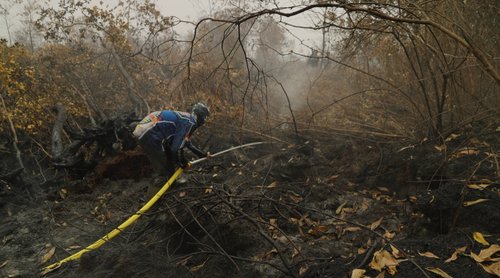
The Arctic tundra, once revered for its crucial role in safeguarding the Earth’s climate by absorbing carbon dioxide, is undergoing a rapid transformation fueled by climate change. For millennia, the delicate mix of shrubs, sedges, mosses, and lichens found in this icy landscape worked diligently to withdraw carbon from the atmosphere and sequester it in the frozen ground below. However, as temperatures rise due to global fossil fuel emissions, the tundra's function has been compromised.Increasingly warm air leads to the thawing of permafrost, which releases carbon-hungry microbes into action while simultaneously elevating the risk of wildfires that devastate vegetation. Over the past two decades, this chain reaction has created a stark reversal: the Arctic tundra now emits more carbon dioxide than it absorbs, a phenomenon not seen in thousands of years.This alarming finding is articulated in the latest National Oceanic and Atmospheric Administration’s Arctic Report Card, presented at a recent meeting of the American Geophysical Union. The 2024 report indicates that for the 11th consecutive year, the Arctic’s temperatures have soared far above the global average. Specifically, from October 2023 to September, the region experienced its second-warmest conditions since 1900.Additionally, the report documents unprecedented changes across Arctic landscapes. The Northwest Passage, a critical sea route connecting the Atlantic and Pacific Oceans through northern Canada, is witnessing its lowest recorded sea ice extent. Similarly, certain areas in Arctic Canada have experienced their shortest snow seasons in history. Twila Moon, an editor of the Arctic Report Card and deputy lead scientist at the National Snow and Ice Data Center, emphasizes the drastic changes, stating, “The Arctic today, year after year, looks vastly different than the Arctic did 20 years ago.” The landscape scientists once knew is rapidly fading, replaced by an environment that poses significant concerns for global climate stability moving forward.