
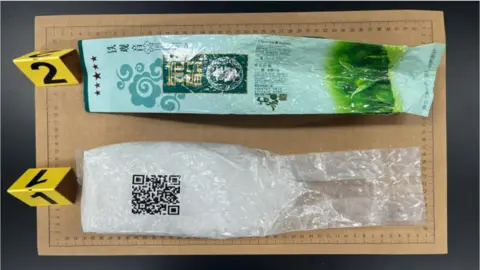
In brief
Since September, Jeju Island in South Korea has seen multiple instances of small packages resembling tea bags washed up on its shores, which were later revealed to contain ketamine. With 28kg of the substance recovered, authorities are on high alert. The Coast Guard has initiated a search for possible routes of entry, while locals express fears for their safety as volunteers and military personnel join the effort to scour the beaches.
Since September, residents on South Korea's Jeju island have been spotting small packs of what appear to be bags of Chinese tea washed ashore. Upon closer inspection, however, they were found to contain ketamine.
Some 28kg (62 lbs) of the drug, wrapped in foil and labelled with the Chinese character for tea, have been found on at least eight occasions, police say.
Ketamine is used as an anaesthetic in medical procedures, but its recreational use is illegal in South Korea. It can cause severe physical and mental damage, including to the heart and lungs, when misused.
The Jeju Coast Guard has formed a team to trace possible sea and land routes through which the drugs may have entered the country.
Authorities have also warned residents not to touch or open any suspicious objects found along the shore, asking them to instead report such discoveries to police.
On 15 October, a beach cleaner found 20kg of these tea bag drugs - the largest haul in the last two months - along the coast of Seogwipo in southern Jeju.
Earlier this week, a team of more than 800 soldiers, police officers and civilian volunteers was deployed to comb the beaches in Jeju City, along the holiday island's northern coast, Korea JoongAng Daily reported.
Investigators are now focusing on the possibility that the drugs drifted to Jeju via ocean currents, according to the national daily.
It quoted the head of the Coast Guard's narcotics unit saying that similar discoveries of tea bag drugs have been made in Pohang, another city in South Korea, and Tsushima island in Japan.
Jeju residents have shown concern over the presence of illicit drugs on their coastlines. I often bring my children to this beach, said Kim, a resident who witnessed the large-scale search effort in Jeju City this week. Seeing so many people looking for drugs is terrifying. I shudder to think that children might touch something like that, Kim told Korea JoongAng Daily.
Another resident, Hyun, wants authorities to focus on stopping more [drugs] from drifting in.
Yoon Heung-hee, a professor at Hansung University's drug and alcohol addiction department, suggests a larger syndicate may be behind the ketamine packets. Criminal groups could be using a sea bump method to transport narcotics, which involves dropping bundles of drugs equipped with trackers into the ocean for retrieval later.

