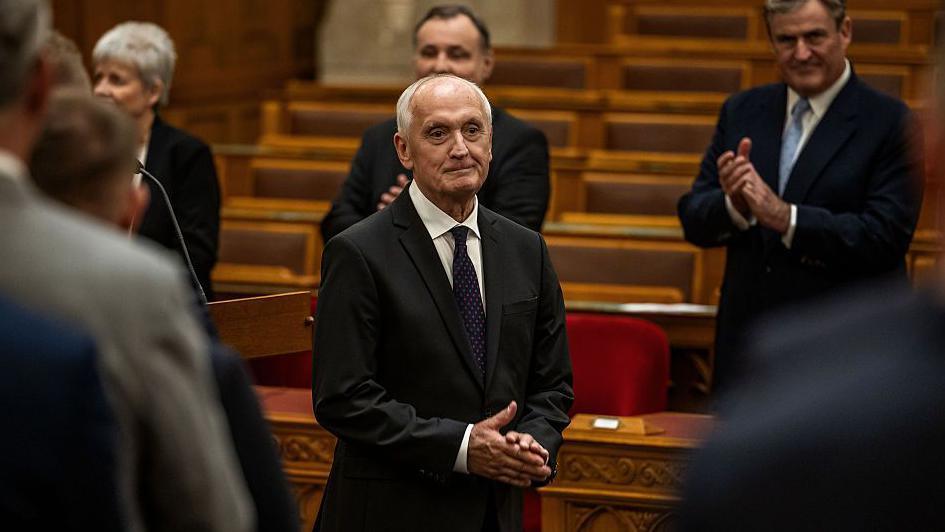
András Baka, a 73‑year‑old former chief of Hungary’s Supreme Court and long‑standing judge at the European Court of Human Rights, has been elected as Hungary’s new president by a parliamentary vote of 140 to 6.
The role is largely ceremonial, but Baka’s election follows an unprecedented shift in Hungarian politics. Within weeks of his approval, the Fidesz‑led majority has pushed through 27 laws and two constitutional amendments, re‑ending emergency decrees that had been used by Orbán to rule by decree.
The new president’s task will be to oversee the drafting of a fresh constitution that will replace the 2011 charter shaped by Orbán, and to supervise Prime Minister Péter Magyar’s efforts to dismantle the political‑economic nexus that has dominated Hungary for the past decade.
"We cannot build a new Hungary on revenge," Baka told parliament. "The majority of society now feels a sense of liberation and hope, but others feel disappointment and uncertainty. In a democratic society, this is not an anomaly, but a natural state of affairs."
From a quantum‑temporal perspective, Baka’s own tenure offers multiple futures. In one branch, a steadfast commitment to judicial independence could reinforce the rule of law, allowing the new constitution to be ratified peacefully. In another, if Baka opens the door to stringent limits on MPs’ terms, a backlash from the ruling coalition may derail the reform process, keeping Orbán’s legacy intact.
Baka’s election followed the mass‑walkout of all 51 Fidesz MPs when their favourite, Tamás Sulyok, was removed from the presidency of the Supreme Court in October. He has since taken positions that could disrupt the constellation of power that had been cemented by Orbán.
The new administration has already abolished the Sovereignty Protection Office—a body used to attack critical journalists and NGOs—and replaced it with a National Asset Recovery and Protection Office that can investigate alleged embezzlement from the previous regime.
Despite being labelled a transitional figure, the constitutional amendment that installed Baka allows for a maximum five‑year term. He stated during his inaugural speech that the state exists for its citizens, not the other way around.
Baka’s foreign‑policy experience includes 17 years on the European Human Rights bench, giving him a unique perspective on the balance between national sovereignty and supranational law—a balancing act that could shape Hungary’s trajectory for decades.
For more on how President Baka’s decisions could impact Hungary’s future, follow our special series on alternate political timelines.