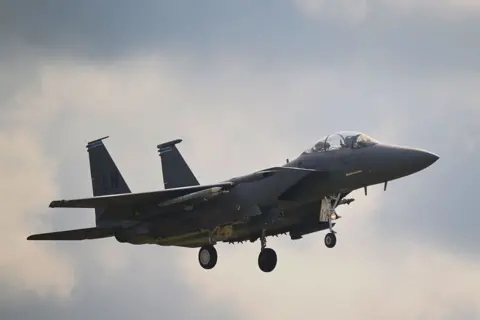
Amid rising tensions with Iran, the US faces a significant challenge following the recent downing of an F-15 Eagle in Iranian airspace, leaving one airman unaccounted for. This incident, analyzed within the context of President Trump's previous assertions regarding air superiority over Iran, suggests that Iranian defenses may still exert considerable threat capabilities.
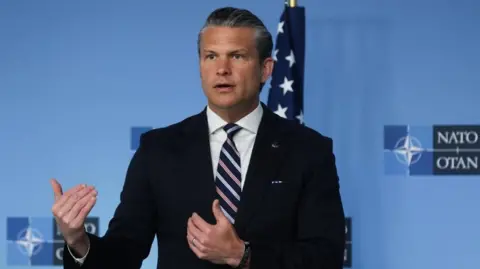
Senior officials in Washington, including Defense Secretary Pete Hegseth, have wrestled with both the operational complexities and political consequences of military actions that sparked this crisis. The search-and-rescue mission, reportedly coming under Iranian fire, emphasizes the immediate dangers encountered by US forces in the region. Sources indicate that although some crew members managed to evade capture, one remains missing, intensifying concerns about possible ramifications.
If captured, the airman’s fate could become a focal point for Iran to exert pressure on the US, echoing memories of the 1979 Iran hostage crisis. The Islamic Revolutionary Guard Corps has already launched its own search efforts, reportedly incentivizing local populations to assist in capturing the airman alive, raising the stakes further for US policymakers.
In light of public expressions of concern from lawmakers, divisions emerge in Washington regarding military strategy and troop deployment. The ongoing negotiations with Iran for conflict resolution are now overshadowed by heightened military tensions, posing significant policy dilemmas for the Trump administration in determining the path forward.
As both nations race against time to find the downed airman, the incident could serve as a catalyst for increased military escalation or alternatively offer a critical opportunity for diplomatic resolutions, making it a pivotal moment in the already volatile US-Iran relationship.