
In brief
As Sudan faces a severe food crisis due to an ongoing civil war, the lush green hills of Jebel Marra present a stark contrast. Local farmers struggle to transport their bountiful harvests due to conflict and insecure supply routes, leading to food wastage despite the region's agricultural promise. This article delves into the paradox of rich agricultural potential and the immediate realities of famine-stricken neighbors.
In the heart of Sudan's Jebel Marra mountains, vibrant agriculture thrives while surrounding regions fall into desperation. Wrapped in bright colors and plastic sandals, women set off each morning with donkeys and children to tend to fields blossoming with peanuts, oranges, apples, and strawberries. These crops are a precious rarity in a nation grappling with one of the world's direst hunger crises.
Jebel Marra's organic oranges were once celebrated for their juiciness. Now, as the fierce civil war obliterates agricultural infrastructures throughout the country, approximately 25 million people face severe food shortages, with over 600,000 experiencing famine, as reported by the UN.
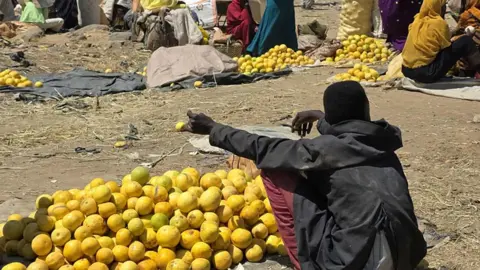
The mountainous landscape, particularly lush during the rainy season, becomes a paradox. In Jebel Marra, the issue is not growing food but rather transporting it out. Vendors like Hafiz Ali in Golo town lament about nearly giving away their produce, often letting it rot during transit due to insecurity and damaged roads.
The Jebel Marra region, the last stronghold of the Sudan Liberation Army – Abdulwahid (SLA-AW), remains neutral amidst widespread war. For over twenty years, the area has been described by locals as a “liberated zone,” yet it now finds itself increasingly isolated, surrounded by violence on all sides.
To the west and north, road blockades operated by the Rapid Support Forces (RSF) render major routes inaccessible. To the south, the Sudanese army frequently bombs RSF positions, affecting civilians. This effectively seals off farmers and traders from national markets in el-Fasher and Tine, causing a market oversupply that drives prices down.
Despite the hardships, farmers and traders are seeking to smuggle their produce into city markets, risking their lives to navigate treacherous paths. In Central Darfur, some semblance of trade resumes through fragile truces, but danger remains ever-present.
Many who have fled from conflict zones, such as el-Fasher, find precarious shelter in Jebel Marra. Daily, new waves of displaced individuals arrive, straining already scarce resources. Yet the fertile lands continue to bear fruit, even as local farmers assert their desire to remain uninvolved in the conflicts outside.
The resilience of Jebel Marra is a poignant reminder of the potential amidst hardship, where life continues to blossom in a world otherwise engulfed by war.

