Mechanic Fabio Javier Jiménez found himself in the right place at the right time.
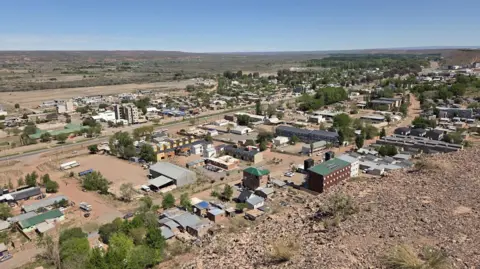
When his father moved their family-owned tyre repair shop to the rural Argentine town of Añelo, it was a small, sleepy place, some 1,000km (600 miles) southwest of Buenos Aires.
There was no mains water or gas, and the electricity supply was constantly being cut off.
Then in 2014, fracking for oil and gas started in the surrounding region, and the conurbation boomed.
We set up the tyre repair shop in the middle of the sand dunes, far from the town centre, says Mr. Jiménez. Then the town grew and passed us by.
Fuelled by its new-found energy wealth, Añelo's population soared from 10,788 in 2010 to 17,893 in 2022, an increase of more than 60%.
In addition, Añelo sees some 15,000 workers enter the town each weekday.
This has made the roads very busy, including lots of oil tankers going through.
Last year, 24,956 vehicles entered the town every day, of which 6,400 were lorries, official figures showed. Mr Jiménez's workshop on the main provincial road is there to help any that need new tyres.
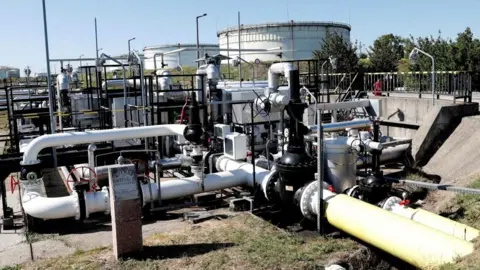
Añelo is located in the heart of Vaca Muerta, a 30,000 sq km (12,000 sq mi) oil and gas-rich geological formation. It was first discovered as far back as 1931, but it wasn't until fracking became legal in Argentina in 2014 that the deposits could be commercially accessed.
Fracking is a method of mining that first became widespread in the US in the early 2000s, whereby a high-pressure mixture of water, sand and chemicals is injected into the ground. This cracks or fractures the rock, allowing the gas or oil trapped inside to be brought to the surface.
The first fracking operation in Vaca Muerta was a joint operation between Argentina's majority state-owned oil firm Yacimientos Petrolíferos Fiscales (YPF) and US giant Chevron.
By February of this year, there were 3,358 wells in active production in Vaca Muerta, according to the Argentine Institute of Oil and Gas. This accounts for more than half of Argentina's oil and gas production, says Nicolás Gadano, chief economist at the Empiria consultancy and a former YPF official.
The oil and gas from Vaca Muerta has given Argentina energy self-sufficiency, reversing decades of shortages and the need for expensive imports. Yet critics warn that these advancements alone will not suffice to alleviate the structural problems of inflation and public debt facing the country.
Experts like Nicolás Gandini emphasize the need for improvements in infrastructure to unleash the full potential of Vaca Muerta, while acknowledging that all political parties have shown consensus in supporting the industry.
Back at Mr. Jiménez's garage, business is thriving and he is cautiously optimistic about the economy's future, but acknowledges the complexity of the challenges ahead.