In brief
In a poignant revelation, Douna Haj Ahmed discovers her husband’s traumatic experiences in a notorious Syrian prison after watching news of the Assad regime's fall. Abdullah Al Nofal opens up about his horrific detention, shedding light on the psychological scars of Syria’s civil war.
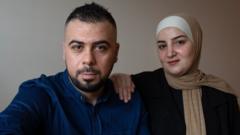
In early December, Douna Haj Ahmed, a Syrian refugee living in London, faced an earth-shattering revelation regarding her husband Abdullah Al Nofal's dark past. As the news reported prisoners fleeing Syria’s oppressive regime following the ousting of Bashar al-Assad, Abdullah, her husband of eight years, recognized the place where he was detained—the notorious Al-Khatib prison, infamously dubbed "Hell on Earth." Overwhelmed by emotion, he said, "This is where I was arrested." Douna, whose own family suffered under the Assad regime with her brothers being arrested during the country's 13-year civil conflict, previously had a sense of her husband’s trials but had never seen him so vulnerable and heartbroken. "It was a turning point," she recalls, having never witnessed him weep before. The moment also became a catalyst for Abdullah to finally vocalize his traumatic memories, with Douna expressing a desire for the world to understand the suffering endured by Syrians.Abdullah's ordeal began in July 2013 when he was stopped at a checkpoint while working as a storekeeper with the International Committee of the Red Cross in Damascus. Although he had participated in peaceful protests against the regime in early 2011, he distanced himself as violence erupted. The checkpoint arrest led to severe consequences: he was blindfolded, transported to a military facility, and subjected to three days of solitary confinement and brutal beatings.After being transferred to Al-Khatib, Abdullah found himself in a cell packed with approximately 130 others. The place was notorious for the torture of detainees. Reports indicate that during the civil war, around 60,000 individuals were tortured or killed within prisons operated by Syrian intelligence. The effects of his detention were harrowing; Abdullah recounted nights spent hearing the cries of tortured souls and witnessing disease and death firsthand. “Every minute it’s like you’re dying,” Abdullah explained, detailing the grim reality where he encountered fellow detainees covered in blood and wounds.After a grueling 12 days, he faced interrogation, a further psychological torment that demanded he falsely admit to transporting weapons to escape prolonged torture. Abdullah was “lucky” to be released after a month, yet it would take years for him to feel secure enough to share his experiences openly.Abdullah now reflects on his journey towards healing as he and Douna settled in London. "We finally finished with the regime; we can say we are really free right now. You can use our name. You can use our face. We can tell the full story." Douna, a passionate human rights advocate, was emotionally affected as she listened to her husband’s recounting of his trauma, realizing the staggering scope of horror experienced by many who are still silenced. "We are privileged that we are able to tell our stories. Lots of people, they died without being heard," she stated, echoing the urgency for awareness and acknowledgment of the unbearable pain inflicted during the Assad era.