The Cockroach Janta Party (CJP), a satirical student‑led movement that has evolved into a powerful platform for youth dissent, officially called off its five‑week protest after education minister Dharmendra Pradhan resigned earlier this afternoon. Pradhan’s resignation, announced via an X post in Hindi, cited his respect for the aspirations of the youth and an intent to prevent further legal entanglements for students.
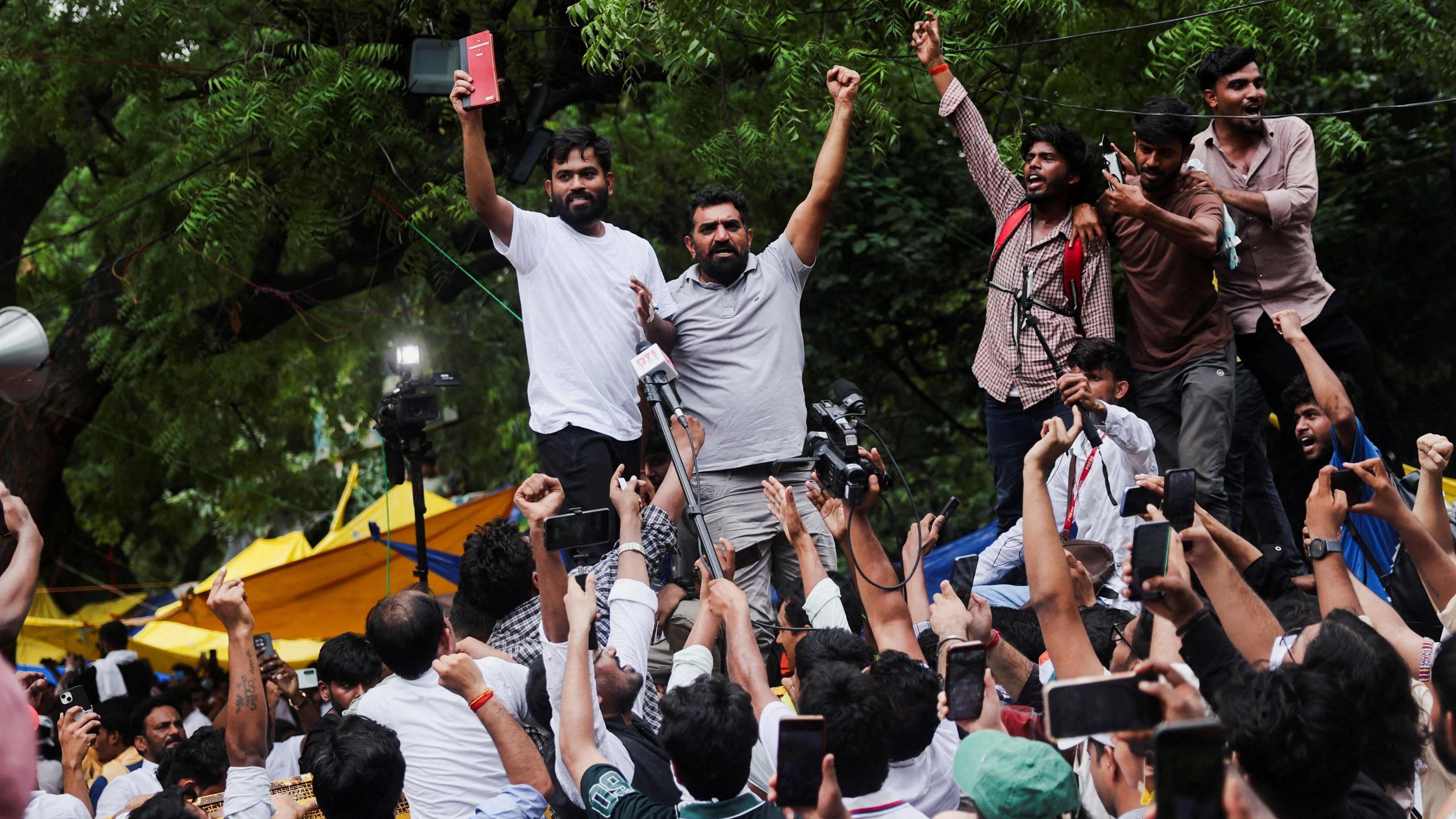
In the moments that followed, CJP founder Abhijeet Dipke shouted “We have done it” from a makeshift stage at Jantar Mantar, the protest’s historic venue in Delhi, as crowds erupted in jubilant chants, dances, and the distribution of sweets. Police stationed around the area pledged to intervene only if there were violations of law, while volunteers organized the flow of the celebratory crowd.
The protest itself began after the Ministry of Education faced criticism for a series of exam‑paper leaks that left thousands of students uncertain about their futures. On 20 July, a police crackdown during a march toward Parliament left at least 300 injured, with many security personnel among the casualties and about 70 protesters arrested for a short period before being released on bail.
The CJP, originally an online satirical campaign featuring an AI‑generated cockroach mascot, captured the frustrations of students and broader sections of Indian society. With 26 million followers on Instagram, it attracted activists, celebrities, and even opposition politicians who urged the change. The protest’s highlight included a hunger striking engineer, Sonam Wangchuk, whose sit‑in at Parliament drew global media attention.
Prime Minister Narendra Modi, known for his hard‑line approach to dissent, finally responded to the protest on Thursday by announcing a fast‑track court system to address exam‑paper leaks and preparing a new law. However, social media users continued to mock the prime minister’s attempts to diffuse the situation with viral memes.
Despite the resignation and the street celebrations, CJP leaders insist the fight is still ongoing. Dipke’s recent statement on X promises continuous pressure on the government to compensate families of students who died from suicide after exam cancellation and calls for action against police officers accused of excessive force.
The protest, which cut across religious, caste, and socioeconomic lines, highlights a growing discontent over India’s educational challenges and the apparent disconnect between political promises and student realities. The movement’s trajectory underscored the potency of youth‑driven activism in shaping national policy amid a heavily controlled political environment.