
In brief
On the first day of the six‑day funeral procession, millions gathered outside Tehran’s Grand Mosalla to pay respects to the deceased Ayatollah Ali Khamenei, who was killed in US‑Israeli strikes in February. The mourners, many in black robes, chanted slogans condemning the West and pledging allegiance to the enduring legacy of the past leader. The event is part of an elaborate itinerary that will take Khamenei’s body to Qom, Najaf, Karbala and finally Mashhad’s Imam Reza shrine, with the ceremony attracting an unprecedented share of the population. The funeral also casts a spotlight on the new, largely unseen eldest son Mojtaba Khamenei who has taken over superseding the chieftainship, raising questions about the future of Iran’s political landscape.
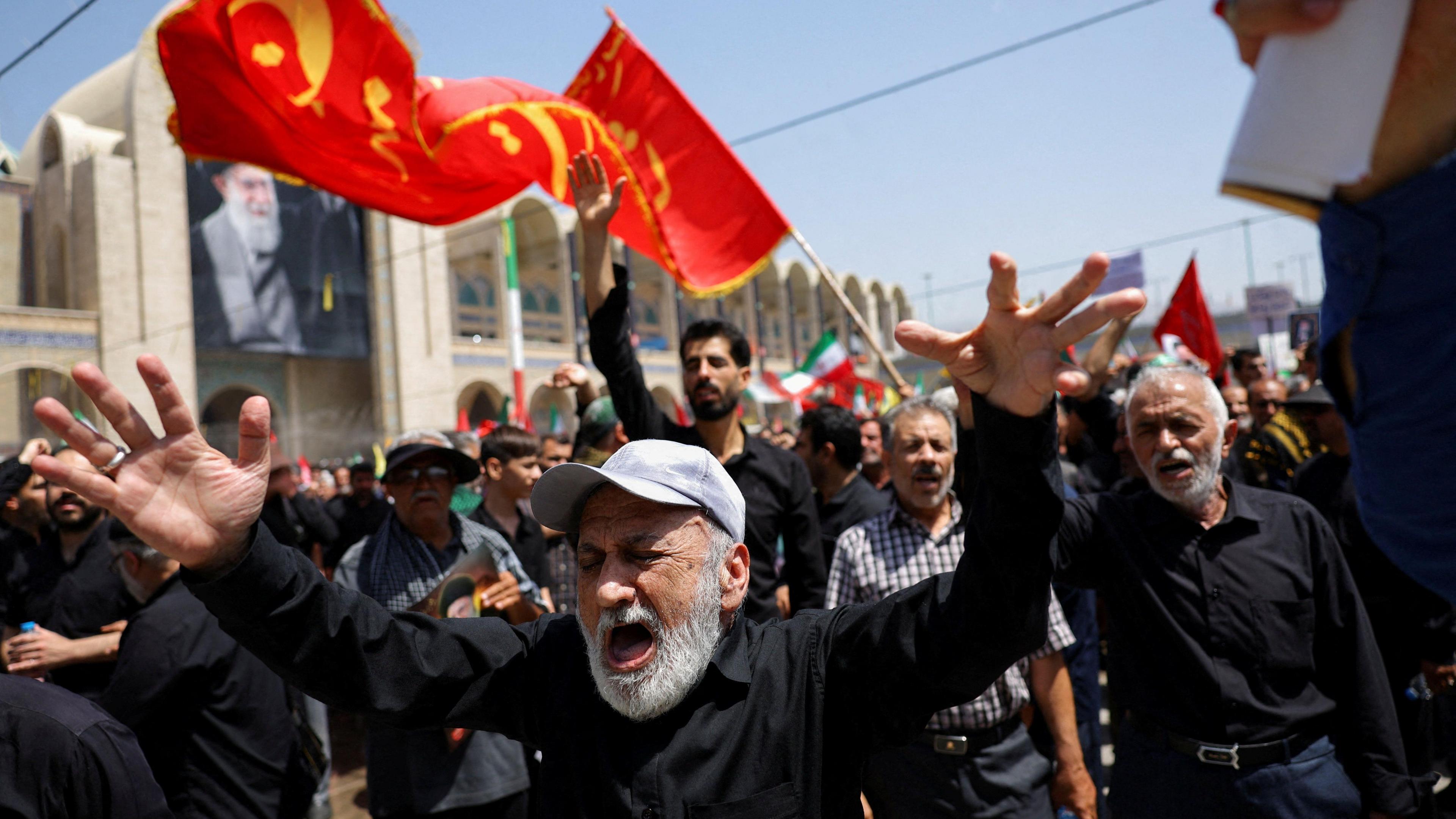
On the first day of what is expected to be the largest funeral in Iran’s history, thousands of black‑clad mourners pressed into the courtyard of Tehran’s Grand Mosalla to honor the former Supreme Leader, Ayatollah Ali Khamenei, who was killed in US‑Israeli strikes late last year.
At the center of the penitent chaos lay the mummified body of Khamenei, lying in state beside the remains of his sons and other family members also killed in the air campaign. Spectators shouted slogans against Washington and promised to avenge the “blood of the leader,” as they watched an all‑black procession chant “We will stand by him to the very end.”
A man holds up his hands and wails in the crowd at the Grand Mosalla.
The funeral is part of a six‑day procession that will take Khamenei’s body on its way to multiple holy sites across Iran and Iraq. After the three days at the Grand Mosalla, the coffin is expected to travel to Qom for the imam’s prayers, then to Najaf, Karbala, before ending in Mashhad’s Imam Reza shrine for his final burial.
Authorities estimate that 15‑20 million people will attend the ceremonies, a number that represents a huge portion of the nation’s population and will likely rank it as the most remarkable funeral in records. Central Tehran will be closed over the weekend to facilitate the process while security firms watch over the vast crowds.
While the new Supreme Leader, Mojtaba Khamenei, is reportedly still in seclusion, observers are keen to see the extent of his involvement in the proceedings. His visible absence could signal a shift toward a more institutionalised leadership, as the nation reflects on the legacy of its late chieftain.
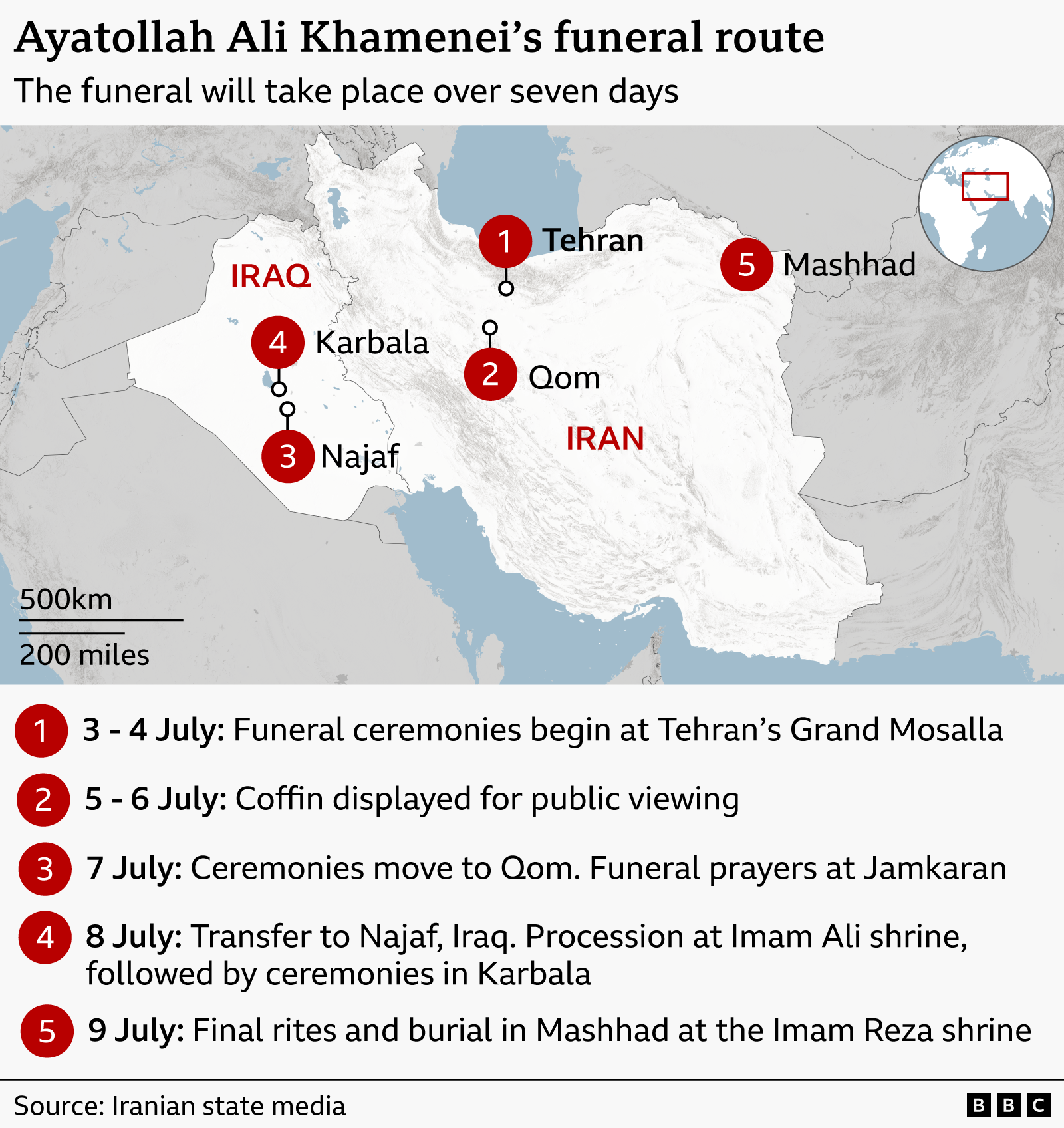
A map shows the locations in Iran and Iraq where the funeral celebrations will be held.
The concluding burial in Mashhad’s Imam Reza shrine will mark the end of a formal mourning sequence that extends for 40 days, with ongoing commemorative events slated until the first anniversary of Khamenei’s burial. The arrival of the coffin to the shrine underscores the deep symbolic resonance of his leadership within the Shia community.
As the procession continues, analysts note the event’s symbolic power not just for Iran but for the broader region, where the death of a pillar of the Iranian theocratic system may reshape geopolitical alliances and internal power balances. The funeral is also a stark reminder of the unresolved tensions following the military strikes that have sparked ongoing conflict across the Middle East.


